Real World Neurotechnology Impact and What’s in Store for the Future
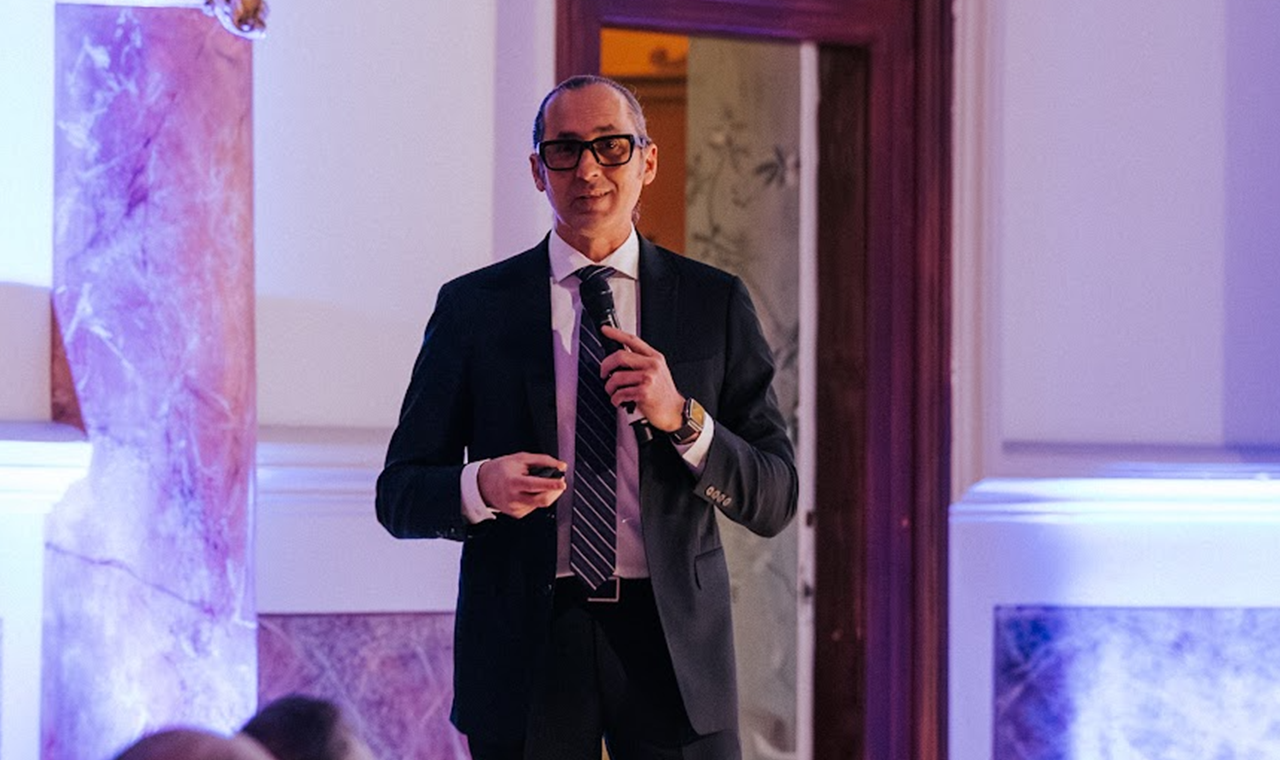
We sat down with Justin Sanchez, Technical Fellow at Battelle, whose expertise spans neuroscience, neural decoding and human machine interfaces, to learn what’s next for neurotechnology and why Battelle believes the nervous system can ultimately become a restorable communication channel.
Q: You recently participated with leaders across brain science, neurotechnology and venture innovation at Bending the Arc of Neuroinnovation, a future-facing discussion held during J.P. Morgan Week in San Francisco. The session asked a bold question: How do we responsibly accelerate breakthroughs that directly interface with the human nervous system?
Can you share what you focused on?
A: At the event, I participated in an investor pitch forum and focused on the key idea that we are at a turning point where neurotechnology can be both accessible and transformative.
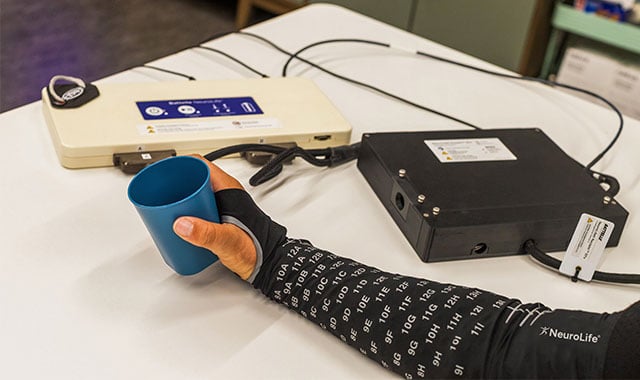
At Battelle, we’ve developed incredible technology called NeuroLife® with great potential for sensing neural intent, supporting rehabilitation and enabling new forms of human-machine teaming. Now, we’re shifting toward commercial readiness.
I shared how Battelle wants to mature our non-invasive NeuroLife platform by advancing prototypes and preparing the technology for market.
Q: What were your key takeaways at the event?
A: The broader takeaway from the event was that responsible acceleration requires three things:
- Accessibility in making neurotechnology usable without invasive implants or cumbersome equipment.
- Real-world integration by embedding neurotech into daily life, not just controlled environments.
- Cross-sector action among the investor community, industry and government to move from “breakthrough” to “impact.”
We’re finally at the point where people understand the concepts of neuroscience and neurotechnology; they’re no longer science fiction but real-world technology people can experience for themselves. That experience is often the greatest catalyst in advancing neurotechnology.
Q: From your perspective, what breakthroughs in neurotechnology are closest to fundamentally changing how neurological conditions are handled?
A: One of the most impactful breakthroughs is the rise of wearable, non-invasive neural sensing and stimulation technologies that can integrate seamlessly into everyday life.
We talked extensively about how NeuroLife can detect neural intent and muscle activity in real-time and while people are simply living their lives. That can open the door to rehabilitation approaches that are more natural, continuous and engaging, rather than those that require repeated trips to specialized facilities.
Beyond rehab, we’re seeing breakthroughs in skill acquisition, movement interpretation and human performance optimization. These developments have the potential to enable people to understand how their bodies and cognitive abilities function, adapt in real time and use AI-powered feedback loops to become the best versions of themselves.
What’s most exciting is that these systems operate without implants or complex headgear, removing barriers to adoption and enabling a new generation of neurotechnology that is practical, intuitive and scalable.
Q: On the Not Impossible Podcast episode, “Can We Rewrite the Brain?” you discussed human-machine interfaces and emerging neurotechnology. How did those topics overlap with the conversations at Bending the Arc of Neuroinnovation?
A: Many of the ideas from the podcast came to life again at the event, especially the concept of the nervous system as a communication channel that we can read, interpret and enhance.
On the podcast, we explored how NeuroLife can support:
- Human-machine teaming by using neural signals to control devices.
- Human-to-human communication where two people wearing NeuroLife sleeves are exchanging information through neural signals.
- Performance readiness for sensing intention, fatigue, effort or physical engagement.
Those same themes surfaced in San Francisco, particularly around dual-use applications. Organizations like the military can also look at how this technology could benefit their personnel. Our non-invasive neurotechnology could offer a practical pathway to measure and enhance those capabilities.
Q: What do you want people to know about NeuroLife technology?
A: Ultimately, both conversations arrived at the same conclusion:
You don’t know what you’re missing until you experience this technology yourself. As this technology becomes more accessible, the ability to be part of shaping what comes next is the real future.
Learn more about NeuroLife at www.battelle.org/neurolife.
Related Blogs
Rehabilitation Beyond the Clinic: How Autonomous Vagus Nerve Stimulation (VNS) Could Accelerate Stroke Recovery
Read More




BATTELLE UPDATES
Receive updates from Battelle for an all-access pass to the incredible work of Battelle researchers.