Building America’s Applied Workforce Advantage
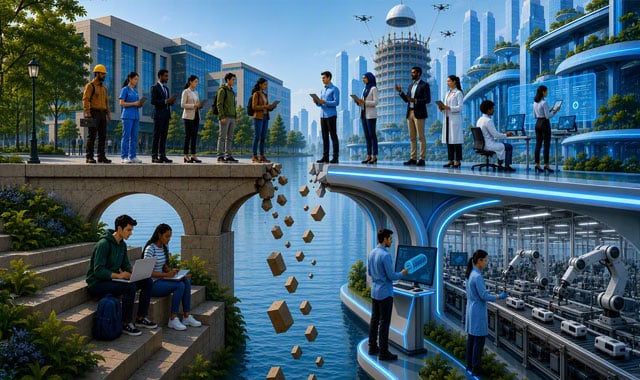
Our nation is at an inflection point. AI is changing what industry needs from its workforce, what students need to learn and, ultimately, what it means to be ready for work.
The stakes extend far beyond the labor market. America’s ability to compete in a global economy increasingly shaped by AI and other advanced technologies will depend not only on the strength of its innovation, but on whether its workforce can put that innovation to work. Developing the most advanced tools and technologies matters. So does having people with the knowledge, judgment and skills to apply them, adapt them to real-world challenges and turn innovation into impact.
The 2026 Battelle Applied Workforce Outlook™ – based on a national survey of 3,629 employers, educators, students, parents and opinion leaders – examines what this shift means for workforce readiness and what it will take to build the capabilities America needs.
The Capabilities That Turn Innovation into Advantage
We are quickly approaching a point where every student and worker will have extraordinary computing power and access to something resembling a PhD in almost any subject in their pocket. That changes the equation. The question will not simply be whether people can use AI. It will be whether they know when to use it, what to ask of it, understand its limitations, question its outputs, think critically and use judgment to recognize when an answer does not make sense.
The Applied Workforce Outlook findings make that clear. Sixty-three percent of corporate decision-makers define workforce readiness in terms of job-specific technical skills, and 62% point to foundational capabilities, such as communication and problem-solving. Only 29% say effective use of AI tools defines readiness.
This does not diminish the importance of AI. It clarifies the workforce need. As advanced tools become more accessible, the differentiator will be how well people can apply them, validate outputs, make sound decisions, collaborate across disciplines and solve consequential problems in real-world settings.
Closing the Gap Between Learning and Doing
If readiness is changing, preparation must change with it. When employers talk about being job-ready, one question for workers increasingly arises: Have you done it before?
Classroom learning remains essential, but America’s readiness gap is increasingly an application gap. For years, America’s K-12 students have been losing ground relative to their international peers in key subjects. The transition to an AI-enabled economy offers an opportunity to change that trajectory by bringing experts together to develop the frameworks, curricula and applied learning experiences students need to discover what happens when knowledge meets a real problem.
Applied projects, internships, apprenticeships and school-connected work experiences help close that gap. More than half of corporate and HR decision-makers identify apprenticeships and school-connected work-based learning as among the most effective ways to increase the supply of talent ready for applied work. High school educators rank it first.
Creating more of these opportunities requires stronger connections among educators, employers, government and communities – because schools cannot close the gap alone, and employers cannot solve it in isolation.
Building America’s Applied Workforce Advantage
The task is not simply to prepare people for their first job. As technology continues to change, America must build a resilient workforce capable of learning and adapting throughout their careers. We should treat workforce capability as a national asset, requiring sustained investment and the same long view we bring to technology, infrastructure and industrial capacity.
America’s ability to compete will depend on more than the strength of its ideas. It will depend on how well we connect science, technology and innovation with people capable of applying them. That makes the applied workforce not only a labor priority, but a strategic capability.
Battelle has spent nearly a century bringing science to bear on consequential national challenges. We believe we can play an important role here as well, bringing industry, education, government and communities together to build stronger pathways between learning and work.
AI creates an inflection point and an opportunity. If we use it well, we can prepare the next generation not simply to work with new technology, but to apply it critically, adapt continuously, solve important problems and contribute at a higher level.
That is an applied workforce advantage worth building, and America’s ability to lead in the decades ahead will depend on it..
Download the 2026 Battelle Applied Workforce Outlook to explore the findings and join the conversation.
Frequently Asked Questions
The Applied Workforce Outlook is Battelle’s new research examining how workforce readiness is changing in an AI-enabled economy. Based on a national survey of 3,629 employers, educators, students, parents and opinion leaders, it explores the capabilities that matter most and what can strengthen America’s long-term workforce competitiveness.
The applied workforce turns knowledge into action. It combines technical expertise and technological fluency with human capabilities like judgment, adaptability and collaboration to solve complex problems and create real-world value.
As AI changes how work gets done, technical expertise alone is not enough. America’s advantage will increasingly depend on people who can combine technology with critical thinking, judgment and problem-solving to turn innovation into real-world impact.
It will take stronger connections across education, industry, government and communities – expanding applied learning, creating clearer pathways between learning and work, and supporting continued development as technology and workplace needs evolve.
Related Blogs
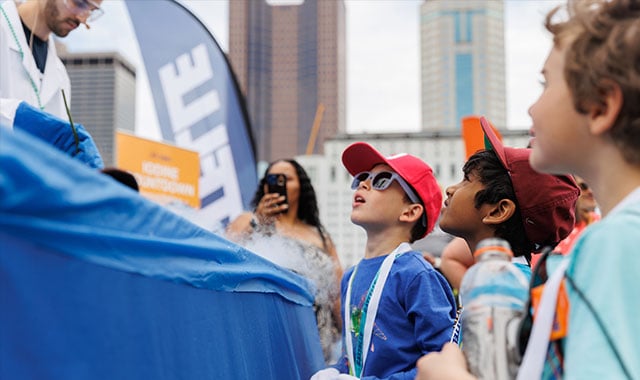
Battelle’s 2024 Ohio State Fair Booth Shines as STEM Learning Center, Platform for Metro Students
Read More
BATTELLE UPDATES
Receive updates from Battelle for an all-access pass to the incredible work of Battelle researchers.