FutureNet Recap on RavenStar™, Open RAN and AI in Telecom
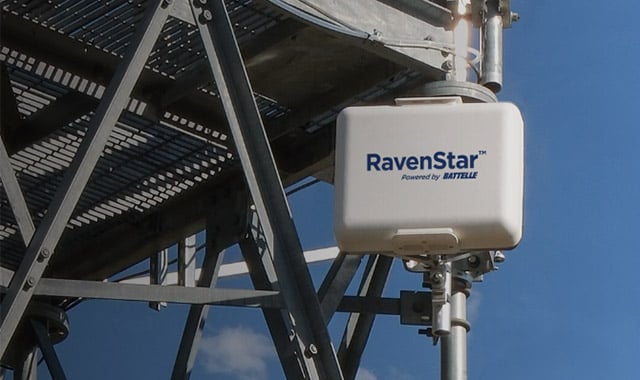
Battelle’s presence at FutureNet sparked meaningful conversations around private wireless, Open RAN and AI-driven network transformation. We sat down with Mark Reudink and Andrew Rosato to unpack their insights from the event and explore how RavenStar fits into the future of the telecom industry.
Q: What was the goal of attending FutureNet?
Mark: FutureNet brought together a diverse mix of regional operators, enterprise leaders and technology innovators who focus on the future of mobile networks. For us, it was essential to be in the room where Open RAN, AI and private wireless were being actively discussed and shaped. The event’s emphasis on meeting capacity demands in dense urban environments and serving mission-critical enterprise applications aligned perfectly with RavenStar’s capabilities.
Andrew: The attendees represented some of the most forward-leaning telecom organizations, including Rakuten, StarHub, Axiata and Singtel. Being there allowed us to listen, learn and contribute to conversations around network transformation. It was also a chance to showcase RavenStar’s readiness for integration and scalability in complex environments. The fact that we were the only ORU vendor present made our participation even more impactful.
Q: Mark, you participated in a panel on private 5G and AI-driven enterprise networks. What were the key takeaways?
Mark: The need for robust, high-capacity networks is increasing, particularly in challenging environments such as the Port of Singapore. This use case requires ultra-reliable connectivity for autonomous vehicle and crane operation, high data rates for video monitoring and the ability to connect to tens of thousands of IoT (Internet of Things) devices.
Andrew: Uplink performance is also becoming critical. As applications become more interactive, networks must support more upstream data. The scale of deployments in certain areas of the world also adds complexity.
Q: What did you learn about Open RAN adoption?
Mark: What surprised us was the strong support for Open RAN among major operators, because it counters the narrative that Open RAN is stagnating. The operators that we spoke with provide services in several countries throughout the region, so having flexibility in the hardware and software they utilize is a competitive advantage.
Andrew: That enthusiasm is encouraging. It demonstrates that operators are committed to diversifying and embracing innovation.
Q: AI was a major theme at the event. How is it transforming telecom networks?
Mark: AI is fundamentally reshaping how networks operate. It enables smarter resource management, such as dynamically adjusting power usage to reduce energy costs and drives proactive maintenance that prevents outages before they occur.
Andrew: What’s interesting is the rise of agentic AI, systems that operate autonomously in the background to optimize network performance without human intervention. Rakuten is already deploying this across its ecosystem, and we’re seeing some carriers accelerate their adoption. These aren’t pilot programs; they’re production-grade implementations.
Q: How are operators managing spectrum and capacity challenges?
Mark: The conversations made it clear that the efficient use of spectrum is no longer a nice-to-have, it’s a strategic imperative. Operators are prioritizing technologies that help them maximize existing assets while preparing for future spectrum allocations.
Andrew: We also saw a strong push toward O-RAN interoperability. Operators are looking for consistency in how radio units are tested and integrated across different vendors and platforms. There’s a clear need for shared benchmarks and collaborative testing environments. It’s not just about deploying new hardware; it’s about ensuring it performs reliably across diverse network conditions.
Q: How did RavenStar fit into what you heard and learned?
Mark: What stood out to me was how much emphasis operators placed on high-capacity, energy-efficient solutions in a diversity of different environments and the multitude of private wireless use cases. RavenStar’s compact form factor and multi-band capabilities resonated strongly in those conversations.
Andrew: Operators are facing real-world constraints such as tower space, spectrum fragmentation and deployment costs. RavenStar’s massive MIMO architecture directly addresses those challenges. It supports up to 400 MHz of occupied bandwidth, delivers high performance across the FR1 band and integrates seamlessly with O-RAN 7.2x fronthaul.
Ready to Build What’s Next?
FutureNet made one thing clear: the future of telecom is open, intelligent and enterprise-ready. RavenStar isn’t just aligned with that future; it’s built for it.
Explore how RavenStar can power your next deployment. Contact the RavenStar team here to start the conversation.
Related Blogs


Delivering tomorrow’s solutions, today. Advancing technology for our warfighters and the future of RF.
Read More




BATTELLE UPDATES
Receive updates from Battelle for an all-access pass to the incredible work of Battelle researchers.