How Microphysiological Systems are Changing Medical Research
Every new therapy, drug or gene-editing technique starts the same way: in the lab, with researchers trying to answer a complex question. Will it work? Is it safe? What could go wrong?
To get those answers, scientists have traditionally relied on two types of models: simple human cell cultures (cells grown flat in a dish) and in vivo models. Each approach has strengths, but also serious limitations. Flat (2D) cultures can’t mimic the complexity of human tissues. And in vivo results don’t always reflect what happens in people.
That’s where microphysiological systems (MPS) come in. These lab-grown systems, built using human cells, are designed to behave more like actual organs and tissues. Their use could help researchers identify toxic side effects earlier, predict whether a drug will be effective in humans, reduce the need for in vivo testing and even tailor therapies to a patient’s unique genetic profile.
What Are Microphysiological Systems?
Microphysiological systems are a category of tools that includes several different types of models. Two of the most common are:
- Organoids: Tiny, 3D clusters of cells grown from stem cells or donated human tissue. These structures self-organize and can mimic many of the functions and features of actual organs like the gut, brain or muscle.
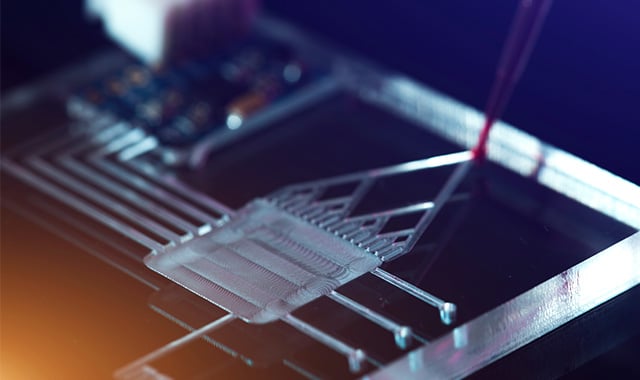
- Organ-on-a-chip: Small, engineered devices with channels that move fluids (like blood or air) past layers of living cells. These systems can simulate things like breathing motion, blood flow or digestion.
Both are designed to recreate key features of human biology, without requiring a living sample or an oversimplified petri dish. Think of them as miniature, simplified versions of a liver, a brain barrier or even a beating heart, engineered to help researchers ask smarter questions and get more human-relevant answers, earlier in the research process.
The Rise of Microphysiological Systems
The field of MPS has grown rapidly over the past decade. What was once considered experimental is now being used routinely by researchers across biotech, pharma and academia. Why? Because MPS offer a few critical advantages:
- They’re faster. Traditional in vivo models take time—sometimes months—to prepare. With MPS, scientists can grow a usable model in just a few weeks. That means faster iteration and more rapid progress.
- They’re built from human cells. This may be the biggest advantage. MPS models reflect human biology more closely than in vivo models. That gives researchers more confidence that what they see in the lab will translate to the clinic.
- They’re more flexible. Want to test 20 different versions of a compound or delivery method? MPS platforms can often be scaled up to run multiple conditions in parallel, which would be difficult and costly with in vivo studies.
- They offer new safety insights. MPS can help detect potential side effects or toxicity issues before a therapy ever reaches clinical trials. For example, liver or heart models have been used to identify drugs that might cause liver damage or dangerous heart rhythms in people early enough to make changes.
- They support personalized medicine. Because many MPS are built using induced pluripotent stem cells (iPSCs), they can be customized to reflect specific genetic backgrounds or even individual patients. This opens the door to more personalized, precise approaches to therapy development.
A Glimpse into the Future of MPS
While microphysiological systems are already making an impact in early-stage research, their potential goes even further. Scientists are now working on ways to connect multiple organ models together, creating “multi-organ” systems that simulate how different tissues interact.
There’s also growing interest in using MPS to evaluate gene therapies and gene editing tools like CRISPR, where understanding safety and specificity is especially important. Being able to observe off-target effects in a human-relevant model—before any patient is involved—could be a major step forward for precision medicine.
At Battelle, we’re exploring how MPS can support our work in early drug discovery, toxicology and next-generation therapies. Our researchers are developing systems that model complex tissue barriers, like the blood–brain barrier and blood–nerve barrier, which are notoriously hard to study using conventional tools. These systems are especially valuable for diseases of the central and peripheral nervous systems and for understanding how therapies cross protective barriers to reach their targets.
MPS tools won’t replace in vivo models entirely. But they can reduce our reliance on them and give us better data, sooner, to guide critical decisions in therapy development. MPS are helping researchers ask better questions, get faster and better answers, and gain critical insights into real human outcomes. That’s a win for science—and for patients.
Related Blogs

BATTELLE UPDATES
Receive updates from Battelle for an all-access pass to the incredible work of Battelle researchers.