Smarter Tools, Better Care: How Clinician Assistive Technologies Help Close the Care Gap
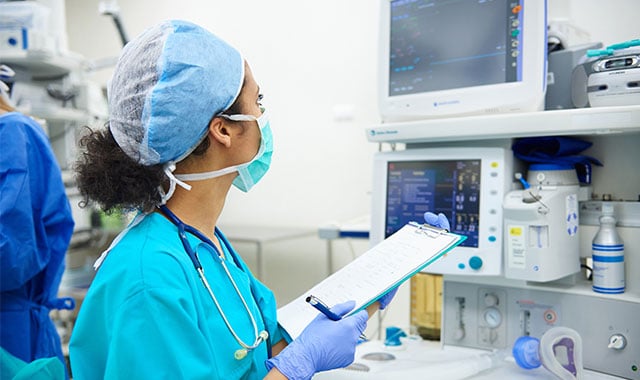
Hospitals and clinics are under pressure like never before. With staffing shortages, rising patient expectations, and increasingly complex care demands, today’s clinicians are being asked to do more with less time, less support, and, often, fewer resources.
To meet these challenges, a new class of technologies is stepping in to help. Clinician assistive technologies are designed to work with providers: augmenting clinical judgment, guiding procedures and automating time-consuming tasks. These tools are already helping to ease the load on overstretched healthcare teams while improving consistency, accuracy and patient outcomes.
A Healthcare System Under Strain
To help fill the gap, health systems are increasingly relying on nurse practitioners and physician assistants. These providers are highly capable and often serve as the primary point of care, but they typically have less clinical experience and fewer training opportunities than physicians. In busy or high-acuity settings, they may be navigating complex cases with limited support.
Meanwhile, experienced clinicians are feeling the strain of modern medicine. Documentation requirements tied to value-based care, expanded treatment options and an aging population with multiple chronic conditions all add to the workload. Many clinicians are spending more time interacting with electronic health records than with patients. As a result, burnout is rising among primary care providers, specialists and clinical support staff.
In this environment, even the most highly trained professionals are being pushed to their limits. The challenge is clear: how can we help healthcare providers deliver safe, timely, high-quality care while reducing cognitive load and extending clinical capacity?
That’s where clinical assistive technology comes in. These are tools designed to support clinicians as they work, extending physician capacity and skills while reducing workloads and streamlining clinical workflows. They don’t replace human expertise; they extend it, helping providers work more efficiently, make better-informed decisions, and deliver consistent care, even in the most demanding environments.
Clinician Assistive Technologies in the Spotlight
Clinical assistive technologies are already transforming the way care is delivered. These tools help clinicians manage complexity, reduce variability and extend care to more patients in more places. Here are some of the ways they’re making an impact:
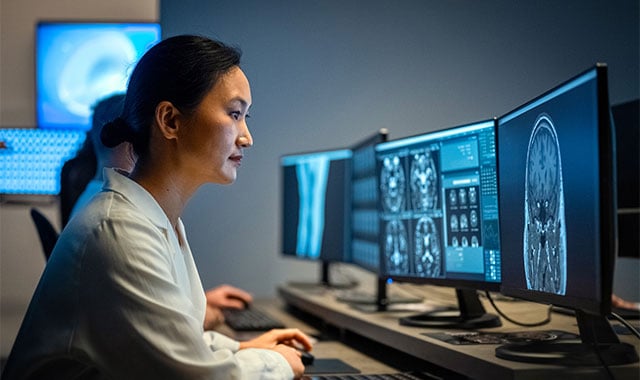
AI-powered decision support tools help clinicians identify risks earlier and with greater confidence. In radiology and pathology, these systems can flag abnormalities that human senses might overlook, suggest likely diagnoses based on large datasets, or even predict complications before they arise. By turning complex data into actionable insights, they help providers make faster, more accurate decisions, especially in high-pressure or high-volume settings.
Robotic-assisted surgical platforms enhance human precision in the operating room. These systems stabilize instruments, reduce fatigue and allow for greater control in delicate procedures, enabling minimally invasive approaches that reduce recovery time and lower complication rates. For less experienced surgeons or small surgical teams, robotic assistance provides critical support and consistency.
Handheld and point-of-care diagnostic tools accelerate time-to-treatment by putting essential capabilities directly in clinicians’ hands. Portable ultrasound devices, smart stethoscopes and mobile ECGs enable immediate bedside
Immersive training and guidance systems support learning and accelerate skill development for both new clinicians and veterans getting up to speed on new procedures or technologies. For example, virtual reality simulators allow providers to practice in realistic, risk-free environments. Augmented reality tools can project anatomical landmarks or procedural steps into the field of view during surgery, giving clinicians real-time visual guidance that improves both confidence and accuracy.
Remote monitoring and telepresence technologies extend the reach of the clinical workforce. Whether it’s a critical care specialist monitoring ICU patients from a central hub, or a rural provider receiving remote guidance during a complex case, these tools make it possible to deliver high-level care across distance and time zones, bridging access gaps and improving continuity.
Workflow automation and digital documentation tools are reducing the cognitive and administrative burden that weighs heavily on today’s clinicians. AI-driven digital scribes, voice-enabled note capture and automated EHR inputs streamline routine tasks, giving providers more time to focus on patients while reducing errors and burnout.
These tools are helping clinicians work faster—and smarter. By embedding clinical expertise into workflows, assisting with real-time decisions and making high-quality care more consistent and scalable, these technologies are becoming essential infrastructure in a rapidly evolving healthcare landscape.
Closing the Gap Between Innovation and Impact
The role of clinician assistive technologies will only continue to grow. As the healthcare system faces mounting pressure—from workforce shortages to rising patient complexity—these tools offer a way to scale expertise, streamline care and reduce clinician burnout without compromising quality. At the same time, advances in AI, robotics, sensing and connectivity are rapidly expanding what’s possible at the point of care.
But building the next generation of clinician technologies isn’t just about what’s technically possible; it’s about what’s clinically usable and effective. To truly support care delivery, assistive technologies must be designed with the end user in mind and developed with a deep understanding of regulatory requirements for medical devices. That means going beyond functionality to consider how tools fit into real workflows, how they support decision-making under pressure, and how they protect patients and data.
At Battelle, we bring together decades of experience in medical device development, systems integration and human-centered design to help our partners navigate this complexity. Our teams understand what it takes to build technologies that succeed not just in the lab, but in hospitals, clinics and remote care settings where the stakes are highest. We integrate human factors engineering, device architecture, cybersecurity and regulatory strategy from the ground up, so the end result works for clinicians, patients and regulators alike.
As clinician assistive technologies become an integral part of modern medicine, the goal isn’t just to create smarter tools. It’s to create tools clinicians can trust and patients can depend on. At Battelle, we’re proud to help make that possible.
Connect with our medical device engineering experts.
Related Blogs

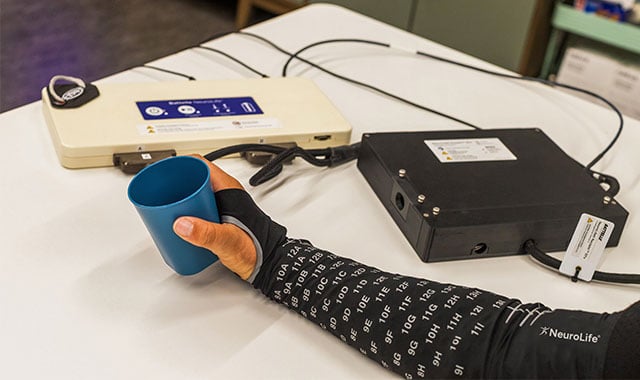
Rehabilitation Beyond the Clinic: How Autonomous Vagus Nerve Stimulation (VNS) Could Accelerate Stroke Recovery
Read More




BATTELLE UPDATES
Receive updates from Battelle for an all-access pass to the incredible work of Battelle researchers.