Aggregating Decarbonization with a Data Center Carbon Storage Hub

Data centers power the planet's most powerful and vital computing technologies. They also require massive amounts of electricity to operate and cool their servers, often relying on fossil-based power even as forward-thinking companies embrace energy strategy and seek to decarbonize. Carbon capture and storage (CCS) offers a pathway to decreasing greenhouse gas emissions without disrupting operations or waiting for the grid to develop alternative carbon solutions.
CCS is the process of separating carbon dioxide (CO₂) from other emitted gases at the source, compressing it into a liquid-like state, and ultimately injecting it deep underground. It's a strategy that supports long-term sustainability goals—and with the right site selection and planning, data center project developers can build large-scale CCS hubs with the potential to generate profit as well.
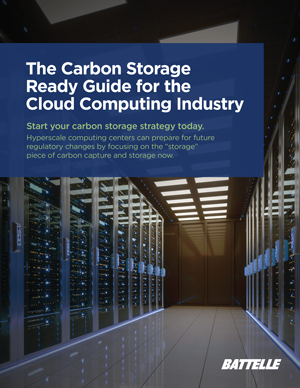
Don't Wait to Get “Carbon Storage Ready”
Developers considering natural gas fired power sources should integrate the need for CCS to avoid the risk of stranded asset. A CCS project begins with the storage assessment: This means evaluating geology, initiating feasibility studies, and beginning the permitting process so you're in a position to move quickly when it's time. Incorporating the carbon capture technology itself is actually the easier part of a CCS project. Well permits, regulatory approvals, and developing an understanding of a site's geologic and engineering properties can often take a few years, even as market conditions and government policies shift.
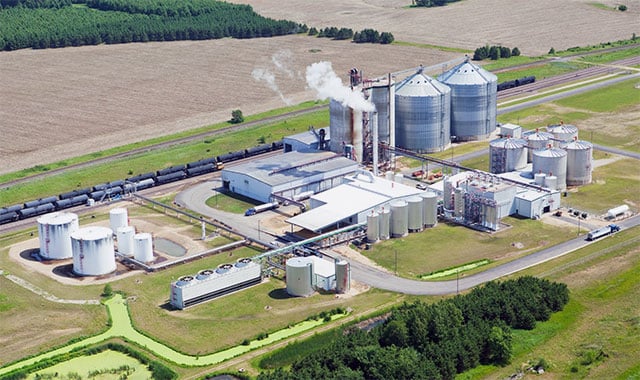
Getting the process underway now means you can secure prime storage sites, protect future compliance, and build credibility in marketing low-emission power in this competitive market. With the goal of building a CCS hub in mind, data center operators can select areas near other nearby CO₂ emitters—industrial facilities, ethanol plants, or oil refineries, or other power plants, for instance—toward the purpose of aggregating their captured carbon emissions for storage.
Scaling up the project will also make it more attractive for investment and incentives. For example, in states with suitable geology and concentration of emitters, we're seeing progress on trunk-and-lateral pipeline systems that connect multiple emitters to a central storage site, similar to the Tallgrass and Summit Carbon Solutions plans for aggregating multiple ethanol emitter volumes.
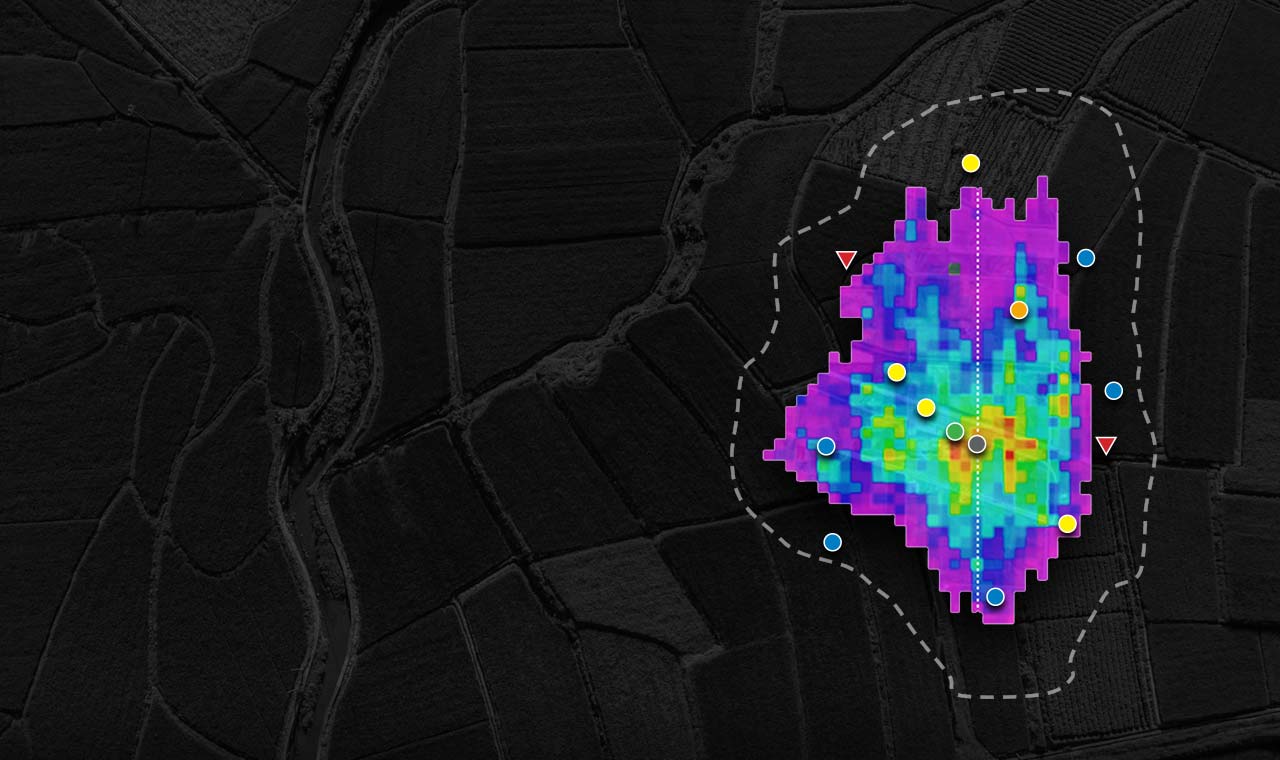
Turning a Project into a Profit Center
Consider the case of a data center project consisting of an 800MW NGCC power plant plans to capture, transport and store 2 mtpa of CO2 at a location 30 miles away. If there are 3 mtpa of other emissions nearby, the developer can turn this into a profit opportunity by offering CCS service to others, provided it is located on suitable geology. Because of economy of scale for well drilling, pipeline sizing, and fixed operating costs, the unit cost of transporting and storing 5 mtpa vs 2mtpa in our hypothetical case can improve by >10%, or more than $1.00/tonne. This translates to an inflation-adjusted $50 million savings for the NGCC plant over a 12-year tax credit period.
In addition, assuming the project charges other emitters for the service at $10/tonne, the extra netback can amount to $70 million over the same 12-year period, which can then be applied to offset capture cost.
Incorporating a CCS hub into your data center project plans can also kick-start potential new revenue streams. The voluntary carbon market (VCM) is poised to embrace point-source CCS that is uneconomical, e.g. Summit Carbon Solutions’ plan to issue carbon credit starting 2027. With the increase in CO2 utilization tax credit to parity with storage ($85/tonne), the captured CO2 may also be sold as feedstock for synthetic fuels or other end uses.
Dig deeper into Battelle's CCS expertise on data center carbon capture with our white paper, “The Carbon Storage Ready Guide for the Cloud Computing Industry.”
Frequently Asked Questions
Absolutely: Class VI wells for CCS require several years of planning and permitting.
A carbon storage site selected and engineered to accommodate trapped CO₂ emissions from multiple sources.
Yes! Tax credits, carbon offset sales, and direct leasing or selling of storage can all provide return on investment—and even profit.
Related Blogs

Powering the Future: A Conversation with Andy Griffith on Nuclear Energy’s Role in the World
Read More

BATTELLE UPDATES
Receive updates from Battelle for an all-access pass to the incredible work of Battelle researchers.