Powering the Future: A Conversation with Andy Griffith on Nuclear Energy’s Role in the World
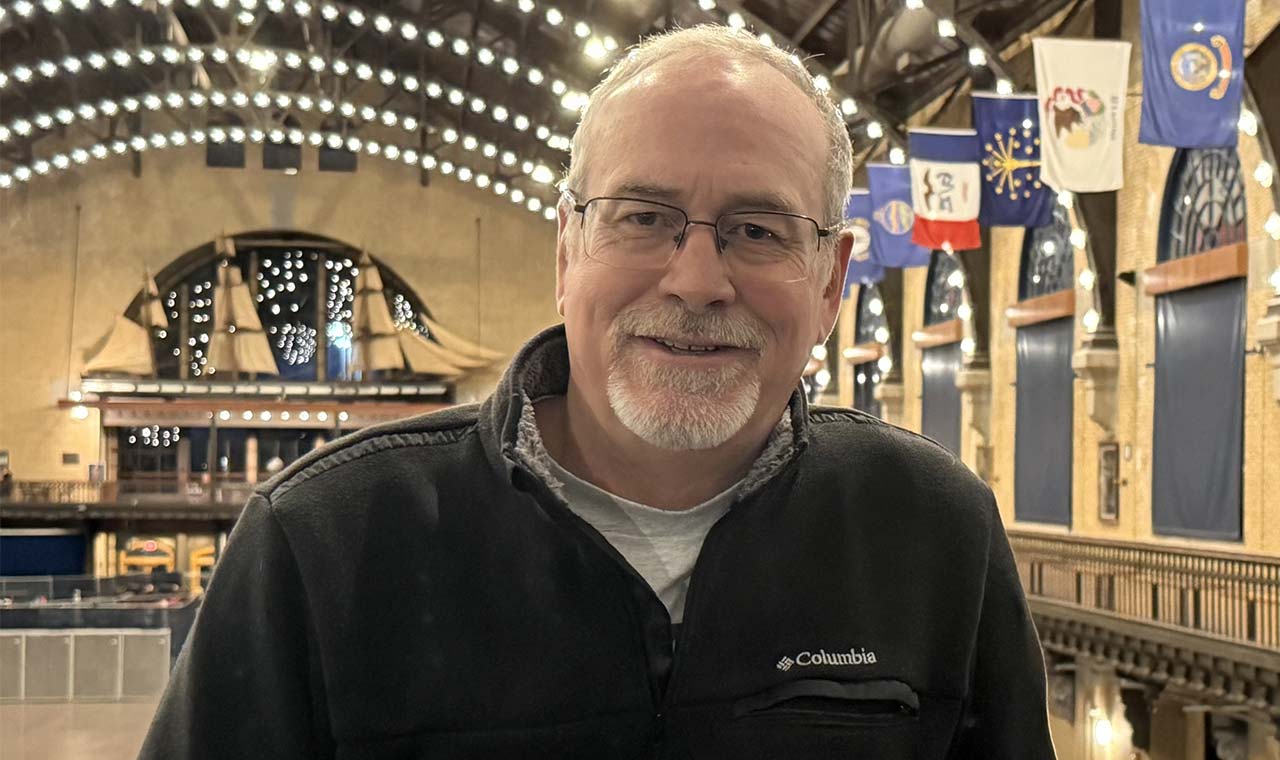
As global energy demands surge, nuclear energy is stepping back into the spotlight. From accident-tolerant fuels to advanced reactor designs and more innovative fuel-recycling approaches, innovations are reshaping how we think about safe, reliable and sustainable power. We sat down with Andy Griffith, whose career spans the Navy, Department of Energy (DOE) leadership in Environmental Management and Nuclear Energy, and service as Acting US Assistant Secretary for Nuclear Energy in 2022, to explore the past, present and future of nuclear technology.
From Submarines to Energy Leadership
Q: Andy, can you give us some of your background? How did you start?
A: I began my career in the nuclear Navy as a submariner. It was an experience working with great people on complex challenges. As a junior officer on the USS Baton Rouge (SNN-689), I served as Main Propulsion Assistant, Chemistry/Radiological Control Assistant, and Assistant Weapons Officer. As a reservist, I served in a range of roles, from Action Officer at the Pentagon to leading a Submarine Advisory Team underway with Carrier Strike Groups. After separating from active duty in 1990, I joined the Department of Energy’s Office of Environmental Management (EM), focusing on high-level waste and spent nuclear fuel management, while continuing to serve in the Navy Reserves and retiring as a captain in 2009. In 2003, I transitioned to the Office of Nuclear Energy (NE), contributing to programs like the Next Generation Nuclear Plant (NGNP) and supporting the Global Nuclear Energy Partnership (GNEP) on advanced reactors and fuel cycle research (as a Federal Project Director). I’ve also had the privilege of managing DOE nuclear research infrastructure, particularly capabilities at Idaho National Laboratory (INL), and later served as Acting Assistant Secretary for Nuclear Energy in 2022.
“Nuclear energy isn’t simple, but today’s designs are safer, smarter and increasingly essential for electricity and industrial applications.” — Andy Griffith
Managing Nuclear Waste: Lessons from the Past
Q: You worked extensively on high-level waste. What should people understand about it?
A: Existing high-level waste primarily originates from the Manhattan Project and Cold War-era recovery of uranium and plutonium for defense. Much of it remains in large liquid tanks, for example, at Hanford, and requires conversion to a solid, stable form for eventual geologic disposal. The work is technically demanding and mission-critical because stabilization reduces risk, improves long-term safety and aligns with responsible stewardship of legacy materials. The U.S. currently generates about 2,000 metric tons of spent nuclear fuel per year from commercial power plants. Going forward, managing spent nuclear fuel and high-level waste generated by advanced reactors, and potentially by fuel recycling, will be much more efficient and will build on the many lessons learned over the past five decades. Safety and the protection of people and the environment will be a given, and the challenges will be improving the cost-effectiveness of system designs and operations.
Idaho National Laboratory: Rebuilding Research Capability
Q: What were your priorities at Idaho National Laboratory?
A: INL’s research mission is distinct from its environmental management responsibilities, and that separation matters when prioritizing investments. Early on, we focused on restoring and modernizing capabilities, including post-irradiation examination, the analyses of irradiated materials that reveal how fuels and components perform under real reactor conditions. We also reactivated the Transient Reactor Test Facility (TREAT), which delivers short-duration, high-energy bursts to fuel samples. TREAT’s in-situ imaging lets us observe material behavior and even test fuel to failure while safely containing any radioactive material and contamination. These tools have been pivotal for Generation IV fuel concepts and for developing accident-tolerant fuels (ATF) for today’s reactors.
From Fukushima to Accident-Tolerant Fuel
Q: How did lessons from Fukushima inform accident-tolerant fuel and how would ATF have helped?
A: At Fukushima, the plant lost power and couldn’t keep the reactor covered with coolant. As fuel became uncovered, steam reacted with zirconium cladding, generating hydrogen, a combustible mixture that led to explosions. While U.S. plants adopted management and safety measures to reduce the likelihood of similar events, we advanced accident-tolerant fuel to further improve resilience and performance.
Technically, ATF includes coatings and dopants that delay and reduce oxidation, hydrogen generation and high-temperature degradation, while improving thermal margins and energy output. We pursued near-term enhancements that could be qualified faster, as well as longer-term approaches for deeper safety and performance gains. Soon, these fuels are being loaded into the U.S. light water reactor fleet, marking a meaningful step forward in operational safety and efficiency.
Global Nuclear Energy Partnership (GNEP): What We Learned
Q: You mentioned GNEP. What were the big takeaways?
A: GNEP examined the economic and proliferation dimensions of recycling spent nuclear fuel. Historically, the costs and complexity, along with proliferation concerns, were significant. But the emergence of advanced reactors, including those using high-assay low-enriched uranium (HALEU), is changing the economic equation. Countries like France and the UK have recycled fuels for years; if the U.S. expands recycling, NRC oversight would be central to ensuring safety and security. A key lesson: simplify the recycling process with fewer steps, clearer waste streams and optimized facility requirements to make it practical and scalable. International collaboration will also be important with close U.S. partners like France, the UK and Japan, as well as the Nuclear Energy Agency under the Organization for Economic Co-operation and Development (OECD), coordinating aspects of the global effort.
Civil Nuclear Credit Program: Preserving Clean, Reliable Power
Q: What stood out from your time as Acting Assistant Secretary for NE in 2022?
A: It was a period of global uncertainty, including the conflict in Ukraine and related concerns around nuclear sites. Domestically, a major achievement was leading the development of the Civil Nuclear Credit (CNC) Program, a congressional directive to preserve economically challenged reactors by recognizing their carbon-free generation. The CNC helped prevent the closure of Diablo Canyon in California and supported the restart of Palisades in Michigan, preserving firm, clean capacity that supports grid reliability and decarbonization.
The Future of Nuclear: Safety, Recycling and Real-World Demand
Q: What should people understand about where nuclear is headed?
A: The need for reliable, clean, 24/7 power is expanding, driven by data centers, AI, industrial process heat applications and decarbonization goals. Modern nuclear designs incorporate passive safety features and decades of operational learning, making plants simpler to operate and safer by design. Equally important, nuclear power uniquely manages its waste, and recycling can reduce repository burdens while extending fuel value. The future is bright, but it demands persistence, patience and clear communication to build public understanding and implement these technologies responsibly.
Why Battelle?
Q: After such an interesting career in the Navy and DOE, what drew you to Battelle?
A: Two things: First, the opportunity to work with my former college swim team teammate, Rob Etkins, who reached out to me after I retired to let me know there was an opening. Second, my role as Battelle Nuclear Energy Research Leader allows me to support the Army’s consideration of advanced nuclear technologies and microreactors. I felt I had more to offer, and having worked with Battelle at the national labs in my career, I was drawn to Battelle as a high-quality organization supporting important national missions and the greater good.
Learn more about how Battelle thinks about nuclear energy here.
Related Blogs



BATTELLE UPDATES
Receive updates from Battelle for an all-access pass to the incredible work of Battelle researchers.