Beyond Connectivity: How Future Mobile Networks Could Help Sense the World Around Us

For decades, mobile networks have been designed to do one thing exceptionally well: connect people and devices. As wireless technology continues to evolve, however, the industry is exploring how mobile infrastructure could serve a second purpose. Future networks may not only enable communications but also help detect and understand activity in the physical world around them.
This emerging capability is known as Integrated Sensing and Communication (ISAC). While still in development for commercial scale, ISAC is attracting significant attention because it has the potential to expand the value of wireless networks without requiring entirely new infrastructure. Instead, it builds on the same spectrum, radio technologies and network investments already being made for 5G-Advanced and future 6G deployments.
At the center of this evolution is massive MIMO, a technology that is already becoming a standard component of modern mobile networks and one that could play a critical role in making accurate sensing capabilities possible.
Adding a New Capability to Mobile Networks
Traditional mobile networks are designed to transmit and receive voice and data calls. ISAC adds another dimension by enabling those networks to gather information about their environment.
The concept is similar to how radar systems operate. A signal is transmitted, reflects off an object and the returned signal that can be analyzed. Those reflections can help identify an object's presence, distance, size and, in some implementations, movement. Importantly, the object does not need to be connected to the network or carrying a device.
The appeal of ISAC is that it allows two functions, communication and sensing, to share the same wireless resources. Given the ongoing demand for spectrum and network capacity, the ability to support both functions within the same infrastructure is generating considerable interest across the wireless industry.
Potential applications span a wide range of environments. Transportation systems could use sensing capabilities to improve traffic awareness or support pedestrian safety at intersections. Public transit systems could potentially provide better visibility into occupancy levels. In connected city environments, sensing could contribute to a broader understanding of activity and movement throughout public spaces.
The long-term vision is to enable these capabilities using wireless infrastructure and spectrum that are already widely deployed, allowing operators to build on existing network investments.
The Importance of Massive MIMO
Supporting both communications and sensing requires networks to direct and manage wireless signals with a high degree of precision. That capability comes from massive MIMO, or Multiple Input Multiple Output.
Massive MIMO enables beam steering, which allows energy to be directed toward a specific object or location and signals to be received from that same direction. For sensing applications, this increased sensitivity is important because it improves the network's ability to detect and characterize objects.
The technology also supports simultaneous interactions with multiple objects, helping networks communicate with or detect several entities at the same time.
Another important capability is interference mitigation. Massive MIMO can reduce the impact of unwanted signals and reflections, helping improve both communication performance and sensing accuracy.
Perhaps most significantly, active massive MIMO systems can support communications and sensing simultaneously. One beam can be used for communication while another is used for sensing, allowing both functions to operate at the same time.
Even without ISAC, massive MIMO already delivers significant benefits for network operators by increasing capacity and improving user experience. According to Battelle's conversations with major operators in the United States and Europe, massive MIMO has become a common choice for new wireless network deployments. As a result, many of the foundational technologies needed for future sensing applications are already being put into place.
RavenStar and the Future of Network Performance
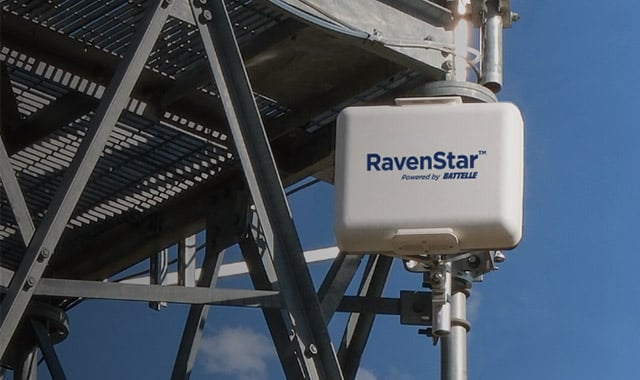
Battelle's RavenStar™ platform highlights how wireless infrastructure is evolving to support next-generation capabilities.
RavenStar is a wideband, Open RAN-compliant massive MIMO active antenna system designed to help operators improve network performance while preparing for future requirements.
One of its key differentiators is antenna density. RavenStar incorporates more antenna elements within a similar physical footprint than traditional massive MIMO approaches. This allows for more steerable beams, improved interference cancellation, and greater directivity. Together, these capabilities can enhance network capacity and improve performance at the edge of a coverage area.
RavenStar also supports a wide frequency range within a single unit. Traditional deployments often require separate antennas for different spectrum bands. By consolidating coverage into one platform, operators can simplify deployments, reduce equipment footprints and address practical considerations such as tower space and permitting requirements.
The platform has already demonstrated Open RAN interoperability and strong throughput performance in third-party testing, supporting Battelle's efforts to advance next-generation wireless technologies.
The Search for High-Value Applications
While the technical capabilities of ISAC continue to advance, the industry is still working through an important question: Who will buy these services, and what use cases will create the greatest value?
Several possibilities are already emerging.
Municipalities may see value in traffic management applications that improve awareness of vehicles, pedestrians and cyclists. Commercial real estate organizations and retailers could potentially use passive monitoring capabilities to better understand movement patterns in physical spaces.
Industrial environments may be among the earliest adopters. On factory floors, where GPS is often unavailable, sensing capabilities could help track robots, equipment and other assets with greater precision.
Healthcare and assisted living applications are also being explored, particularly in environments where movement detection could provide additional awareness and support. Similarly, sensing capabilities could play a role in disaster response and search-and-rescue scenarios, including situations where traditional communications may be unavailable.
Another area receiving significant attention is drone detection. Mobile networks already provide broad geographic coverage, making them a potentially attractive platform for detecting and tracking unauthorized drones across large areas. Public safety organizations and government agencies have expressed interest in applications that could help protect public events, venues and other sensitive locations.
The breadth of these opportunities highlights both the promise of ISAC and the challenge facing the industry. Although many potential use cases have been identified, the market is still determining which applications will provide the strongest business value.
Why Operators Are Paying Attention Now
Although many ISAC use cases are still emerging, network operators do not have the luxury of waiting until every business model is fully defined.
Wireless infrastructure planning operates on long timelines. Decisions being made today about radio units, distributed units and network architectures will influence what capabilities operators can support years from now. As the industry prepares for broader 5G-Advanced deployments and eventually 6G, infrastructure choices made during current upgrade cycles will shape future opportunities.
Waiting until sensing applications are fully mature could mean missing an entire hardware refresh cycle.
That reality is one reason ISAC has become such an important topic across the wireless ecosystem. Industry standards are already evolving, and operators are evaluating how future networks can support both communications and sensing from the outset.
Exactly how ISAC will be monetized remains to be seen. But one point is already clear: operators that want the option to offer sensing capabilities in the future will need to consider sensing-capable infrastructure as they make investment decisions today.
As the wireless industry continues to evolve, technologies such as massive MIMO and platforms like RavenStar are helping lay the groundwork for what comes next. Tomorrow's mobile networks may still be defined by connectivity, but they could also unlock entirely new ways to understand and interact with the environments they serve.
Related Blogs

Delivering tomorrow’s solutions, today. Advancing technology for our warfighters and the future of RF.
Read More


BATTELLE UPDATES
Receive updates from Battelle for an all-access pass to the incredible work of Battelle researchers.