Are You Ready for the AFFF Phase-Out?
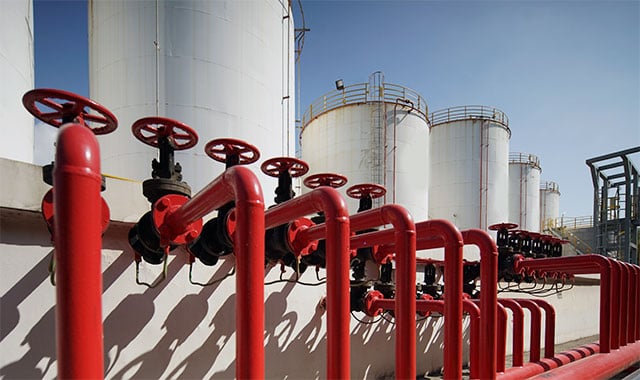
Industrial facilities still using aqueous film-forming foams (AFFFs) for fire suppression should start taking steps now to review potential risks and prepare for a PFAS-free future. Regulatory, legal and supply chain pressures are all converging to make continued AFFF use a growing liability.
But replacing AFFF isn’t as simple as swapping one foam for another. The transition to fluorine-free alternatives (F3s) raises difficult questions about system compatibility, cleanup protocols, disposal requirements, and long-term risk. And with no standardized solution, facilities must navigate this shift with care.
The Push for PFAS-Free Foams
There is currently no federal ban on AFFF for industrial use, but regulatory, market and stakeholder pressures are rising. Facilities that wait for formal regulation may find themselves caught unprepared, facing higher costs, tighter deadlines and greater liability. Here's why proactive planning is critical.
- State-Level Bans Are Expanding: More than half of U.S. states have passed or proposed legislation restricting the use, sale, or manufacture of AFFF. Enforcement timelines vary, but the trend is clear, and navigating a patchwork of rules adds complexity for multi-state operators.
- PFAS Now Classified as Hazardous: The EPA’s designation of PFOA and PFOS as hazardous substances under CERCLA creates new legal and financial exposure for historical and future PFAS releases. Even small spills could trigger mandatory reporting and cleanup obligations.
- Insurance and Investor Pressure: Insurers are pulling back from PFAS-related coverage, while investors and ESG-focused stakeholders increasingly view PFAS reliance as a material risk. Lack of a transition plan could affect insurability, access to capital, and reputation.
- Foam and Parts Are Getting Harder to Find: Major manufacturers are exiting the AFFF market, making it more difficult to source both the foam and the parts needed to maintain aging fire suppression systems. Waiting too long could leave facilities scrambling to find support or forced into rushed decisions.
That’s why many industrial facilities are considering switching to fluorine-free firefighting foams (F3s) sooner rather than later. However, making the switch isn’t always simple and there is no one size fits all approach.
From AFFF to F3: More Than a Product Change
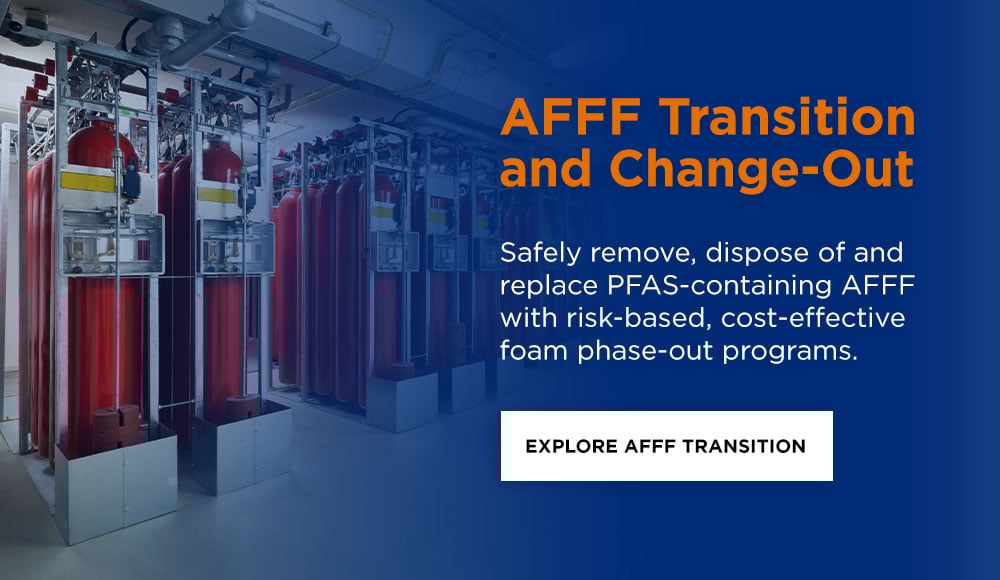
Switching from AFFF to fluorine-free foam (F3) isn’t just a matter of picking a new product off the shelf. It’s a technically complex, logistically demanding, and often site-specific process that touches nearly every aspect of fire protection planning. Compatibility issues, infrastructure limitations, cleanup protocols and waste disposal all add layers of complexity, and there’s little regulatory guidance to follow.
Even seemingly small oversights—like residual PFAS “rebound” in cleaned systems or using an incompatible foam formulation—can create costly setbacks and renewed liability. That’s why the transition to PFAS-free foam requires careful evaluation, not just procurement.
Some of the most common challenges include:
- System Compatibility: Many legacy systems aren’t designed for F3 foams, which may require different pressures, application rates or discharge devices.
- Residual Contamination and Rebound Risk: PFAS compounds bind tightly to piping and tanks. Even after rinsing, trace levels can reappear and contaminate new foam.
- Foam Performance Variability: Unlike AFFF, F3 foams are not universally interchangeable. Each product performs differently and must be matched to specific systems, fuel types and use scenarios.
- Lack of Clear Guidelines: There’s no federal standard for what constitutes a PFAS-free system or how to get there. States differ on rinse protocols, waste disposal and compliance requirements.
- Waste Disposal Complexity: Spent foam and rinse water often require hazardous waste handling, with limited disposal options and rising regulatory scrutiny.
- Training and Operational Impact: F3 foams behave differently in emergency scenarios. Fire teams need new training, and facilities must update SOPs and maintenance routines.
Want more? Read our blog "6 Top AFFF Replacement Challenges (And How to Solve Them)" for key insights.
Given this complexity, a one-size-fits-all approach won’t cut it. Facilities need a strategy that accounts for their specific infrastructure, regulatory exposure, operational needs, and risk tolerance. That’s where a risk-based approach becomes essential. And Battelle is here to help you navigate complexity with confidence.

A Risk-Based Approach to the AFFF Transition
There’s no universal formula for replacing AFFF. What works for one facility might be costly, unnecessary, or even risky for another. That’s why smart organizations are taking a more strategic, risk-informed approach to AFFF replacement.
Want more? Read our blog "A Risk-Based Approach to AFFF Transition" for all the details.
A risk-based framework helps prioritize actions based on what matters most: regulatory deadlines, environmental considerations, legal exposure, infrastructure readiness, safety, and business continuity. It ensures that resources are focused where the risk is highest, whether that’s potential liability, system failure or supply chain disruption.
Instead of asking, “What’s the quickest way to switch foams?”, the better question is: “What’s the smartest way to reduce long-term risk while maintaining fire protection and operational resilience?”
"With regulatory, legal, and supply chain pressures converging around AFFF, the time to act is now. Prudent facilities are embracing risk-informed strategies tailored to their unique challenges."

- Bryon Dahlgren, P.E., BCEE
Senior Program Manager
Ready to move forward with your AFFF replacement strategy? Or just need some guidance as you consider the options? Our PFAS experts are here to help you evaluate risks, identify practical solutions and build and execute a transition plan tailored to your organization and individual facilities. With decades of experience in PFAS science, regulatory navigation, and remediation strategy definition and execution, Battelle brings the insight and support you need to make confident, well-informed decisions. Our project management and executional excellence will provide worry-free foam transition completion.
Contact us to discuss your foam transition needs, and learn how a risk-based approach can help your facility make the switch to fluorine-free foam with confidence—on your timeline, within your budget and in alignment with your operational goals.
Related Blogs


PFAS in Semiconductor Manufacturing: Why “Forever Chemicals” Are Becoming a Strategic Challenge
Read More


-blog-hero.jpg?sfvrsn=963fba16_1)
BATTELLE UPDATES
Receive updates from Battelle for an all-access pass to the incredible work of Battelle researchers.