A Risk-Based Approach to AFFF Transition
As industrial facilities transition from AFFF to PFAS-free foam alternatives, every decision matters. Each choice—from how thoroughly to clean a system to which fluorine-free foam (F3) to select—impacts liability, performance, cost and operational readiness. Because these factors are deeply interconnected, a successful Class B foam transition requires more than a product swap. It demands a coordinated, risk-informed strategy.
Done right, an AFFF transition can reduce environmental exposure, strengthen compliance and support long-term resilience. But reaching that goal means navigating complex tradeoffs across fire suppression system performance, foam compatibility, waste management and regulatory readiness. A risk-based approach helps industrial operators make smarter, more confident decisions at every step.
Managing AFFF Foam Transition (And Why It’s Harder Than It Seems)
Aqueous film-forming foam (AFFF) has been the gold standard for suppressing Class B fuel fires due to its rapid spread, vapor-sealing properties and heat resistance. But its effectiveness comes at a cost: AFFF contains polyfluoroalkyl substances (PFAS), which are now linked to persistent environmental contamination, long-term health risks and mounting regulatory, legal and financial pressure.
In response to these key drivers, the AFFF foam transition is gaining momentum across the U.S. Industrial facilities, airports and military installations are working to replace PFAS-containing firefighting foam with safer fluorine-free foam (F3) alternatives. But the decision to replace AFFF isn’t as simple as selecting a new product and moving on.
Are you ready for the AFFF phase-out? Read this Battelle blog to learn more.
A successful Class B foam transition involves a host of interconnected decisions. Facilities must evaluate their fire suppression systems, assess PFAS contamination, handle hazardous rinse water and waste, and retrain staff—all while keeping operations compliant, safe and cost-effective.
Common challenges in AFFF replacement include:
- Lack of clear regulatory guidance
- System contamination and rebound risk
- Infrastructure compatibility and retrofitting
- Waste handling and environmental risk
- Training and operational readiness
- Cost and business disruption
These factors make the Class B firefighting foam transition a complex, high-stakes process. A risk-based approach is essential for navigating these challenges, reducing uncertainty and ensuring that every decision aligns with your site-specific risk tolerance, infrastructure, regulatory environment and performance goals.
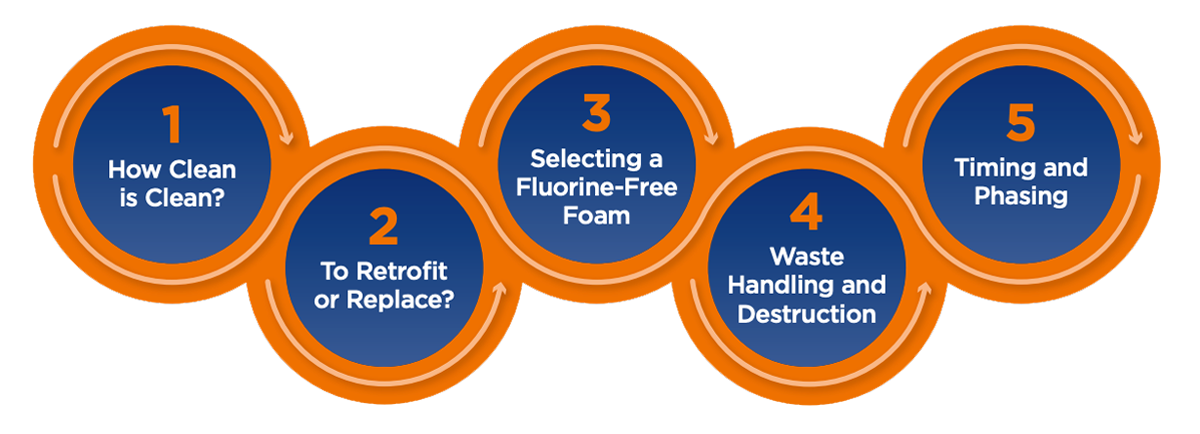
5 key decisions that are involved in navigating a successful AFFF transition.
Taking a Risk-Based Approach to AFFF Transition
No two AFFF transition projects look the same. Facilities vary in infrastructure, risk exposure, location and fire fighting and protection needs. A risk-based approach helps operators weigh costs, benefits and tradeoffs to make informed, site-specific decisions, rather than relying on one-size-fits-all solutions.
Here are five critical decision points every facility should navigate when planning a Class B foam transition.
1. How Clean Is Clean?
Removing AFFF from a firefighting system isn't as simple as flushing it once and walking away. PFAS compounds in AFFF are notoriously persistent; they adhere to internal surfaces like piping, tanks and valves and can leach back into rinse water over time, a phenomenon known as rebound contamination. To truly remove AFFF and reduce long-term liability, facilities need to choose a rinse protocol that matches their risk profile, regulatory environment and operational goals.
Common Rinse Options:
- Single rinse: A straightforward water flush designed to remove residual AFFF from the system quickly. It’s low cost and minimally disruptive to operations, but it comes with a higher risk of rebound contamination and may not meet regulatory expectations in more stringent jurisdictions.
- Triple rinse: This method involves three or more rinse cycles, often using heated water or increased flow rates to dislodge residual PFAS more effectively. It offers a better removal rate than a single rinse but generates more waste and increases handling and disposal costs.
- Amended rinse: Chemical amendments can be added to rinse water to help break PFAS bonds and pull contaminants from surfaces more thoroughly. While this approach offers the greatest potential to reduce rebound risk, it requires expert oversight and specialized waste handling, and it may introduce new regulatory complexities.
Key Considerations:
- What are the regulatory expectations in each state in which you operate?
- How close are assets needing fire protection to drinking water sources or sensitive receptors?
- What will it cost to treat or dispose of rinse water safely?
- What’s the organizational tolerance for residual risk and long-term liability?
2. Retrofit or Replace?
One of the biggest decisions in any AFFF change-out is whether to retrofit your existing fire suppression system or replace it entirely. While retrofitting may seem like the easier, more cost-effective path, it’s not always the right long-term solution—especially if the system is aging or incompatible with newer fluorine-free foams (F3). Each alternative has pros and cons.
Retrofitting:
This involves cleaning the existing system and modifying components (e.g., pumps, nozzles or proportioning equipment) to work with F3 foams. It can be less expensive upfront and reduce downtime, but only if the system is in good condition and can easily be made compatible with the selected foam. Retrofitting may also leave more room for rebound contamination if rinsing isn't thorough.
Full Replacement:
Involves removing the entire AFFF-based system and installing a new firefighting system designed specifically for F3 performance. While this option is more costly and time-consuming, it eliminates legacy contamination risk, ensures system compatibility and may better align with ESG and long-term operational goals.
Key Considerations:
- How old is the system, and what is its expected remaining service life?
- Can current components reliably support F3 foam?
- Is rebound contamination still a concern even after rinsing?
- Would replacing the system now reduce future risk or costs tied to failure, liability or compliance?
3. Selecting a Fluorine-Free Foam
Choosing the right fluorine-free firefighting foam isn’t just a matter of picking from a list of PFAS-free products. These foams vary widely in their performance characteristics, system compatibility and regulatory acceptance. A poor match can compromise emergency response or create costly retrofit requirements down the line.
Common Considerations When Selecting F3 Foams:
- Performance and application needs: Some F3 foams perform well in high-flow, fixed systems; others are better suited to portable or manual use. Key variables include the types of fuel hazards present, discharge rate requirements and ambient conditions. Not all foams meet the same fire performance standards, especially in cold weather or high-vapor environments.
- System compatibility: Because F3 formulations differ in viscosity, expansion rate and required pressure, they don’t always work with existing equipment, especially if your system was engineered specifically for AFFF. Even switching between F3 products can require adjustments to ensure consistent delivery and effectiveness.
- Supplier reliability: Long-term product support and availability should factor into your decision. Look for manufacturers with a proven track record, quality control and a stable supply chain, especially if your system depends on specific foam specs for certification or insurance requirements.
Key Considerations:
- What fuel types and fire risks exist at each facility?
- Does the foam meet performance expectations for your risk profile and operating conditions?
- Is the manufacturer likely to provide consistent supply and long-term product support?
- Are there specific specifications for certain foam types?
4. Waste Handling and Destruction
Safely disposing of AFFF-related waste is one of the most complex and high-stakes aspects of the transition. Spent foam, rinse water and contaminated components are often considered hazardous waste and carry significant regulatory and reputational risks. Choosing the right disposal method involves balancing cost, availability, long-term liability and alignment with corporate ESG goals.
Common Options:
- Deep well injection: This method injects liquid waste deep underground into stable geologic formations. It’s an established option for some industrial wastes and may be available in some regions. However, it doesn’t destroy PFAS, but only contains it, and may face increasing public opposition or regulatory scrutiny.
- Secure landfilling: PFAS-contaminated solids and stabilized waste may be landfilled at facilities permitted for hazardous materials. Landfilling is widely available and often cost-effective up front, but it doesn’t eliminate PFAS. The potential for leaching or long-term liability remains a significant concern.
- Thermal incineration: High-temperature incineration may destroy PFAS if conditions are tightly controlled. However, incomplete combustion is a risk, and regulators are increasingly cautious about emissions from burning PFAS. Not all incinerators are permitted or equipped for this type of waste.
- Destruction technologies: New methods such as plasma-based destruction or supercritical water oxidation (SCWO), such as Battelle’s PFAS Annihilator®, offer promising alternatives. These technologies are designed to break PFAS bonds and destroy the compounds entirely, eliminating long-term risks associated with PFAS waste disposal or containment.
Key Considerations:
- What disposal methods are permitted or preferred in each operating state?
- Does the facility have a tolerance for long-term liability, or is elimination of PFAS a priority?
- What are the costs associated with each disposal option?
- How do corporate ESG goals influence the choice between containment vs. destruction?
5. Timing and Phasing
When and how you transition from AFFF matters just as much as what you transition to. A rushed replacement can lead to costly oversights, while a delayed approach could increase exposure to liability, noncompliance or operational risk. Striking the right balance requires aligning your transition with internal capacity, regulatory deadlines and your facility’s unique risk profile.
Common Phasing Strategies:
- Immediate Transition: For high-risk sites or those under urgent regulatory scrutiny, a full and immediate transition may be the best path. This approach prioritizes safety and compliance but can strain budgets and disrupt operations if not carefully managed.
- Staggered Transition: Many operators take a phased approach, prioritizing the most vulnerable or highest-risk sites first. This spreads out costs and resource needs over time and allows lessons learned from early transitions to inform future upgrades.
- Opportunistic Transition: Some facilities bundle foam replacement with scheduled maintenance or capital improvement projects. This minimizes downtime and helps offset costs, but may delay full compliance if not clearly tracked and managed.
Key Considerations:
- What are the applicable compliance deadlines in each jurisdiction?
- Where is your organization most vulnerable to PFAS-related risks or scrutiny?
- Do operational schedules or budget cycles create opportunities for strategic phasing?
- Is the organization prepared—financially and operationally—for a full system transition?

A Risk-Based AFFF Transition Starts with the Right Partner
Every aspect of the AFFF foam transition—rinsing systems, retrofitting infrastructure, selecting new foams and managing waste—carries its own risks, costs and tradeoffs. A one-size-fits-all approach simply doesn’t work. To avoid costly missteps and long-term liabilities, industrial operators need a transition plan built on science, strategy and site-specific risk analysis.
Battelle specializes in risk-based AFFF transition programs that balance performance, cost and compliance. With decades of PFAS leadership and deep expertise in fire suppression systems, we help you:
- Prioritize high-risk assets and tailor decisions to local regulations and site conditions.
- Evaluate foam, system and disposal options in the context of long-term risk and operational readiness.
- Ensure alignment with your organization’s ESG goals, budget and timeline.
- Coordinate vendors and implementation across all stakeholders with minimal disruption.
Let us help you design a safer, smarter firefighting foam transition.
Talk to a Battelle expert to get started, or download the whitepaper to learn more: Navigating the AFFF Phase-Out.
Related Blogs


PFAS in Semiconductor Manufacturing: Why “Forever Chemicals” Are Becoming a Strategic Challenge
Read More


-blog-hero.jpg?sfvrsn=963fba16_1)
BATTELLE UPDATES
Receive updates from Battelle for an all-access pass to the incredible work of Battelle researchers.