The Human Advantage: Why SOF Readiness Starts with People
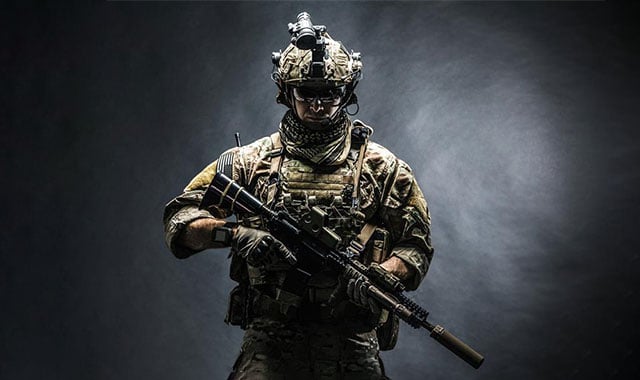
The most important technology in Special Operations Forces (SOF) isn't a platform, a weapon or a piece of kit. It's the operator.
That's the core message of the SOF Renaissance, the strategic vision laid out by the U.S. Special Operations Command (SOCOM). It has significant implications for how we think about readiness, resilience and the future of force modernization.
Within SOCOM and the Preservation of the Force and Family (POTFF) enterprise, this philosophy has a name: the Human Weapon System.
What Is the "Human Weapon System"?
The Human Weapon System refers to the human operator who employs military equipment, integrates complex systems and makes the critical decisions that determine mission success and bring our operators home alive. It is a deliberate assertion that the operator—not the platform—is the primary capability worth investing in. The term reflects a simple but powerful idea: the human operator is an integrated system of capabilities that must be developed and sustained with the same intentionality the military applies to platforms, weapons and communications systems.
This isn't a new idea. It's rooted in the First SOF Truth, established decades ago: "Humans are more important than hardware." What's new is the urgency and the rigor with which SOCOM is now operationalizing this principle.
The term may sound stark, and that's intentional. It's not meant to imply that people are weapons. Rather, it recognizes that SOF operators are the decisive “technology” in any mission. They integrate and operate advanced systems. They interpret chaotic, ambiguous environments. They make rapid, high-stakes decisions under extreme pressure. And they adapt in ways that machines and platforms cannot.
As the SOF Renaissance document states: "Technology may accelerate missions, but it is the operator whose body, mind and character determine mission success."
The term also signals a shift in how we resource and prioritize. For decades, the defense enterprise has applied rigorous systems thinking to platforms and hardware, investing in design, maintenance, modernization and lifecycle management. The Human Weapon System concept requires us to apply the same systems thinking to people, including the physical, psychological, cognitive, social/family and spiritual dimensions that collectively determine readiness.
This systems approach—treating the operator as a whole person rather than a collection of isolated capabilities—is the foundation of the POTFF enterprise and the modern SOF human performance model.
The Human System as Strategic Advantage
Why does this matter now? The broader national conversation offers some answers.
Recent reporting—including a New York Times editorial series examining U.S. military readiness—has highlighted vulnerabilities in legacy weapons systems and questioned whether continued investment in traditional platforms will deliver the overmatch America needs. The concern is straightforward: adversaries can replicate or counter hardware. The human element is harder to match.
SOF Renaissance reflects this reality. The document identifies speed of innovation, adaptability and comfort with chaos as hallmarks of Special Operations—qualities rooted in the human, not the equipment. It places people as the "#1 priority and center of gravity" for SOCOM, signaling a shift from platform-centric modernization toward human-centric modernization.
This philosophy aligns with the framework SOCOM uses to organize human performance efforts: the Four P's (Prevent, Prepare, Prevail, Preserve). Each depends on the strength of the human system.
- Prevent: Anticipate injuries, deliver timely interventions and prevent illness before it degrades capability.
- Prepare: Build readiness through training, conditioning and family support.
- Prevail: Equip operators with the cognitive tools, decision support and resilience to perform under pressure.
- Preserve: Promote recovery, optimize long-term health and support operators and families beyond the mission.
Readiness, in this view, is not merely physical or tactical. It is cognitive, emotional, relational and ethical. It encompasses the whole person across the entire career arc—and beyond.
Preparing for the Future of Force Readiness
Today's threats are converging across cyber, space, information and physical domains simultaneously. Operators must function across all of these, often at the same time and under conditions of uncertainty and cognitive overload.
Emerging technologies raise the bar further. Artificial intelligence, autonomous systems and advanced sensing capabilities demand operators who can think faster, adapt more fluidly and sustain performance under high cognitive load. Traditional readiness metrics, focused narrowly on physical capability, no longer capture what modern conflict requires.
The Human Weapon System model addresses this reality. By organizing readiness into five interdependent domains—physical, psychological, cognitive, social/family and spiritual—SOCOM creates a framework that can anticipate strain, prevent degradation, strengthen resilience and preserve long-term capability and legacy.
In the next blog in this series, we'll explore each of these domains: what they mean, how they interact, and why optimizing the whole operator is essential to sustained performance.
A Commitment to the Science of Human Performance
This perspective on readiness aligns with Battelle's commitment to science-driven, holistic approaches to human health and performance. For decades, Battelle has brought rigorous research, multidisciplinary expertise and practical solutions to the challenge of protecting and optimizing human capability.
Our mission is to elevate the readiness and resilience of warfighters, veterans and their families. Through advanced analytics, neuroscience research, program management and integrated health solutions, we're committed to advancing the human advantage.
Ready to learn more? Explore Battelle's Human Health and Performance capabilities.
Up Next: The Five Domains of Human Performance—physical, psychological, cognitive, social/family, and spiritual. What does it mean to optimize the whole operator?
Featured Expert
Alison Messick
DIRECTOR OF WARFIGHTER READINESS AND RESILIENCE
Alison Messick serves as the Director of Warfighter Readiness and Resilience, leading enterprise-wide initiatives that strengthen the readiness and resilience of U.S. Special Operations Forces and other military teams. A former U.S. Marine and nationally recognized leader in military health and family systems, Alison brings more than 25 years of experience in advancing human performance, behavioral health, and family engagement. Her work drives innovation and integration across large-scale programs to ensure service members and their families remain mission-ready, resilient, and supported.
Related Blogs


BATTELLE UPDATES
Receive updates from Battelle for an all-access pass to the incredible work of Battelle researchers.