The Long Game: Performance Longevity and the Cumulative Cost of a SOF Career
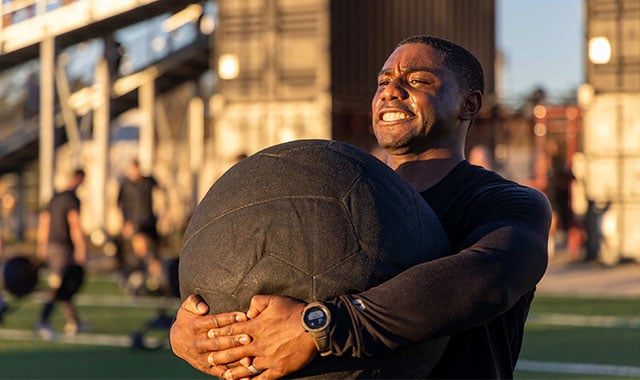
In Special Forces, you don't throttle back in training. You can't. The only way to be ready for what combat demands is to operate as if it's real—full intensity, full load, full commitment. There's an old principle behind this, sometimes attributed to Sherman: better to sweat in training than bleed in war. After thirty years, I believe that as much as I did on day one.
But that sweat has a cost. When you're operating at the pinnacle of your profession—going harder, faster and stronger than you ever thought possible, and never saying “no” to a task even when it’s at the edge of your physical capabilities—the body keeps score. The injuries that accumulate in a SOF career aren't failures of the system. In many ways, they're evidence that the system is working exactly as designed.
SOCOM selects for extraordinary capacity. The training pipeline is among the most demanding in the world. The performance infrastructure SOCOM has built is highly effective.
But peak physical performance at selection is not the same problem as sustained performance at year 15. The demands accumulate. The body keeps score. And the score compounds across every domain—physical, psychological, cognitive, spiritual, relational—in ways that a single fitness test was never designed to capture.
The goal isn't just to minimize injury. It's optimizing an operator's functional capacity across the full arc of a career, so that the person who leaves SOF leaves as intact as possible for whatever comes next.
That is the long game. And we know what it takes to win it.
When Pain Comes with the Mission
I faced my share of injuries and pain over my 30-year career in U.S. Army Special Forces. It comes with the territory. But the one that really slowed me down was plain old tennis elbow. It was in my right arm, my dominant arm—my pistol gripping arm. For anyone else, that might mean backing off the racket for a few weeks. For an Operator, it meant I couldn't grip my pistol properly. That's not a minor inconvenience. That's a mission-critical problem.
I kept going. That's what you do. The pain was excruciating at points, but the calculus wasn't complicated: stepping back meant stepping away from the team, and that wasn't something I was willing to do. Looking back, it was probably preventable: better technique, a smarter workout routine, earlier attention to what my body was telling me. Instead, I managed it the way most operators manage things. I pushed through until I couldn't ignore the impact on my performance anymore. That pattern, disregarding pain until it becomes a functional problem, isn't unique to me. It's structural.
Rob Wilson, a long-time consultant to Special Operations commands, has spent years working directly with operators on performance longevity. He notes: "You'll select out of the job if you can't disregard pain. Understanding that as a starting place is really important if we want to actually help operators." In fact, some people might even say that successful Operators enjoy suffering on some level; there is a twisted sense of pride in being able to suffer more than others, knowing you can do things others cannot.
SOF training and operational requirements place extreme demands on the musculoskeletal system: heavy packs over rough terrain, parachute landings, extended movement under load. Operators frequently train and deploy at a caloric deficit, limiting the body's resources for healing and adaptation. And recovery time is constrained by operational tempo and mission realities. Unlike elite professional athletes, whose careers at peak physical demand typically span ten to fifteen years, SOF operators may sustain that demand for twenty years or more, with no defined off-season for recovery.
The injury data reflects the cumulative reality of this tempo:
- More than half of SOF operators experience at least one musculoskeletal injury per year, and roughly half of all musculoskeletal injuries in SOF are chronic rather than acute, a result of repeated stress rather than acute injury.
- Nearly 77 percent of musculoskeletal injuries in Army SOF have been classified as preventable—or more precisely, reducible in severity through earlier and better-integrated intervention.
- Musculoskeletal injury is the leading cause of medical discharge and accounts for nearly half of all restricted duty days across the military.
This makes addressing cumulative wear and pain an urgent priority for maintaining performance and career longevity. Early intervention is essential to optimizing performance, extending career span and improving quality of life for operators both during and after their SOF careers.
However, the same attributes that make operators exceptional are, in some ways, the ones that make early intervention hardest to achieve. Wilson points to three overlapping dynamics that lead to lower rates of reporting from SOF operators:
- Pain is part of the environment. Combat preparation is inherently uncomfortable. Operators who cannot normalize physical discomfort don't make it through selection. As a result, reporting pain can feel indistinguishable from complaining about the job itself.
- Identity is bound to the team. Being pulled from a mission or training cycle is not simply a scheduling disruption. For most operators, separation from the team strikes at the core of who they are. The calculus—push through versus step back—is never purely medical.
- Operators compensate quietly. When formal reporting feels costly, operators find workarounds. They push through. They self-manage pain and sleeplessness through whatever is available: supplements, palliatives or other means.
The goal is not a pain-free career. That is not a realistic target, and operators know it. The goal is a career—and a life after it—that the body can sustain.
Bearing the Cumulative Load
Pain and cumulative physical wear don't exist in isolation; they reverberate across every domain of the human system. Science has a name for this dynamic: allostatic load, the cumulative physiological, neural, and neuroendocrine toll of chronic stress and sustained physical demand. In SOF, that load is exceptional by almost any measure.
VA research bears this out: SOF veterans carry significantly higher rates of chronic pain, osteoarthritis, and sleep disorders than their conventional force counterparts — a pattern that reflects not a single injury, but the compounded cost of years of sustained demand across every system.
There's another dimension to this that doesn't show up in injury data. You don't switch an operator off. The alertness, the hypervigilance, the always-on readiness—it doesn't stand down when the mission ends. A system running continuously with no recovery cycle accumulates wear faster than one that's managed deliberately. That's true of equipment. It's equally true for people.
Dr. Scott Dombowski, a physical therapist with over twenty years of Army service and seven years as Director of Human Performance for a JSOC command, emphasizes the importance of a holistic approach to operator health and performance: "We have to look at the entire human. If we only look at the physical data in isolation, we're never going to rise above the water and actually solve the problem."
That integration matters because the cascade runs in every direction. The operator who carries an unaddressed back problem for five years isn't just accumulating a physical injury. Pain disrupts sleep. Fatigue degrades cognitive performance and emotional regulation. The injury encroaches on family life: on the ability to be present, to participate, to show up as a parent and partner outside the wire. At the same time, cognitive and psychological stresses accumulated in SOF life, including brain trauma and PTSD, can both amplify chronic pain and make compliance with proactive treatment protocols more difficult. Ultimately, unaddressed chronic pain and injury impact not only career span, but quality of life, both during and after service.
Performance longevity means getting ahead of that cascade, not just managing its consequences.
Applying System Thinking to the Human System
What does it take to get ahead of the cascade? Early intervention, coordinated care, and a whole-system approach to prevention and recovery are already demonstrating results across the force. Physical therapists, athletic trainers, performance dietitians, strength and conditioning coaches, and cognitive performance specialists embedded across the force are doing important work, and targeted intervention programs designed for military populations have shown measurable reductions in injury severity and rates. The Protection of Force and Family (POTFF) framework, organizing support across physical, psychological, cognitive, social, and spiritual domains, provides exactly the architecture that performance longevity requires.
What the research shows is that full engagement across that architecture is what drives the best outcomes. Dombowski, drawing on his experience managing human performance programs at the JSOC level, is direct: "The people who were most successful staying in the fight were those engaging across multiple aspects of the program. If they were only engaging in one, there was some benefit, but the most benefit came from people genuinely engaged in more than one domain."
The opportunity ahead is in making that full picture visible over time. The detailed performance history an operator builds across years of assignments, training cycles and deployments—the injuries, the recoveries, the accumulated load—is precisely the data that could drive earlier, better decisions. But right now, history doesn’t always travel with the operator. Each unit transition, each PCS move starts the record fresh. Connecting those data streams across providers, across commands and across the career arc transforms isolated snapshots into a longitudinal readiness picture.
A commander who can ask not just "is this operator cleared?" but "what does this operator's longitudinal physical picture look like, and what does that mean for the mission ahead?" is operating with a fundamentally more accurate readiness picture. That is the data infrastructure performance longevity requires.
This is precisely where Battelle’s capabilities in program management, data analytics and military health systems come into play: making complex, multi-source data legible to the people who can act on it. Our role is to amplify the work that has already proven successful on the ground and systematize effective programs to expand their reach across the force.
That work requires more than analytical capability. It requires credentialed practitioners who are culturally aligned with the SOF mission, program management infrastructure built for scale and complexity, and the institutional staying power to sustain those efforts across the full arc of the operator career.
The Long Game
Operators are selected for durability. The POTFF enterprise exists to make that durability last—not just through selection, not just through the next deployment, but across a career and into whatever comes after it.
The science of allostatic load reframes what a SOF career demands — not as a series of discrete injuries to manage, but as a cumulative system cost that requires a cumulative system response. It connects what practitioners are treating in the clinic to what commanders are assessing on the readiness roster to what operators are carrying in their bodies long after the deployment ends. And it makes the long game legible: without that whole-system view, everyone is managing symptoms. With it, everyone is managing their career.
Performance longevity is achievable. Science supports it. The practitioners are doing the work. What comes next is building the systems that let that work scale, so the operator who gives everything to the mission still has something left when the mission is done.
That's the long game. And it's worth winning.
Advancing Performance Longevity for Those Who Serve
Battelle brings together neuroscience, data analytics, human performance science and program management expertise to support the readiness and resilience of SOF operators and their families—across the career arc and beyond.
Ready to learn more? Explore Battelle's human health and performance capabilities.
Related Blogs




BATTELLE UPDATES
Receive updates from Battelle for an all-access pass to the incredible work of Battelle researchers.