Understanding the Human System: The Five Domains of SOF Readiness
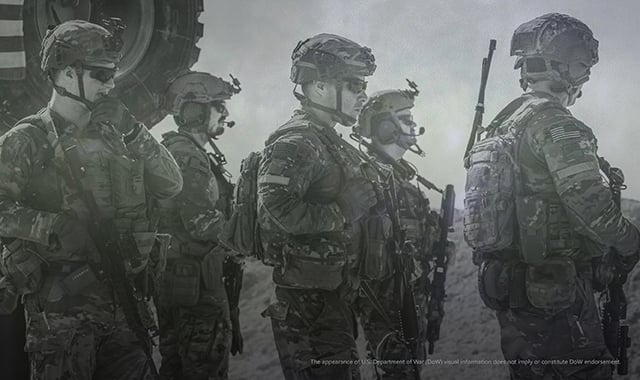
Special Operations Forces (SOF) operators face demands that few outside the community can fully understand: years of high-stakes missions and training, cumulative physical wear, repeated deployments, time away from family, exposure to loss and moral complexity. Physical fitness alone can’t ensure operational readiness. Sustaining operators and their families across a career requires looking at the complete picture—not just the body, but the mind, relationships and sense of purpose that keep people in the fight and improve quality of life.
That reality is reflected in U.S. Special Operations Command’s (SOCOM) holistic approach to readiness. The Preservation of the Force and Family (POTFF) program identifies five interconnected domains essential to sustained operator performance: physical, psychological, cognitive, social/family and spiritual. Together, they form what SOCOM refers to as the human weapon system.
The Five Domains
POTFF exists to strengthen readiness and resilience across the SOF lifecycle: selection, training, deployment, recovery and transition. It does so by embedding human performance professionals throughout the force. This approach reflects a hard-won understanding: the demands placed on SOF operators and families are extraordinary, cumulative and inseparable. The five domains are not standalone categories to be optimized independently. They function as an integrated system, where strain or strength in one area inevitably affects the others. Understanding this system is foundational to sustaining SOF capability over time.
Physical
The physical domain includes strength, endurance, mobility, injury prevention, recovery, sleep and nutrition. It enables operators to carry heavy loads, endure extreme environments and sustain performance during long, demanding operations. When properly developed and maintained, physical readiness reduces preventable attrition and preserves the operator’s capacity to remain mission capable over time.
This domain is essential, but insufficient on its own. Physical readiness provides the foundation, but mission success depends on how well it is supported by the other domains. Long-term readiness requires viewing the body not as a standalone asset, but as part of an interdependent human system.
Psychological
The psychological domain encompasses emotional health, stress tolerance and behavioral resilience. It allows operators to function effectively under uncertainty, risk and prolonged operational pressure. Psychological readiness is not about suppressing emotion but about regulating it and processing difficult experiences without degradation of performance.
The realities of SOF life—repeated deployments, long hours, combat exposure, loss of teammates and morally complex decisions—create cumulative psychological strain. When unaddressed, this strain can affect judgment, team dynamics, mission execution, family relationships and overall quality of life. Supporting this domain is essential not only for individual well-being, but for maintaining trust, cohesion and performance when the stakes are highest.
Cognitive
The cognitive domain includes attention, working memory, situational awareness, adaptability and rapid decision-making. It is the mental engine of performance in complex, fast-moving environments. As modern conflict becomes more information-dense and technology-enabled, cognitive load continues to increase.
Operators today must process sensor data, manage networked communications and make time-compressed decisions with life-or-death consequences. The ability to think clearly under pressure—to recognize patterns, manage ambiguity and adapt quickly—has become a decisive factor in operational success, and its importance will only grow.
Social/Family
The social and family domain provides the support structure that enables sustained performance over time. It includes family stability, communication, social connection and unit cohesion. Strong family and social support reduce burnout, improve retention and strengthen resilience both on and off the battlefield.
For SOF operators, this domain carries unique weight. High operational tempo, frequent deployments and mission sensitivity place extraordinary strain on families. Stress flows in both directions: concerns at home affect focus and performance on mission, while operational stress and trauma can disrupt family life in subtle but significant ways. Preserving the force requires caring for families as well as operators; the two cannot be separated.
Spiritual
The spiritual domain addresses purpose, identity, moral grounding and resilience in the face of loss and ambiguity. While faith traditions are important for many service members, this domain extends beyond religion to the deeper “why” that sustains people through experiences that defy easy resolution.
SOF missions often involve impossible choices, exposure to suffering and the loss of teammates. Over time, these experiences accumulate and demand a source of meaning and moral stability that extends beyond physical or psychological resilience alone. Within POTFF, chaplains play a key role in supporting this domain, but responsibility for fostering purpose and moral resilience rests with leaders at every level entrusted with the long-term health of the force.
An Integrated System for Modern Readiness
The five domains are not a checklist—they are a network. Strain in one domain inevitably affects the others. A physical injury can disrupt sleep, degrade mood and impair cognitive performance. Prolonged separation from a team can erode social connection and challenge identity and purpose. Conversely, strong family support, adequate recovery and a clear sense of purpose reinforce resilience and performance across the system.
This is why SOCOM’s shift toward holistic readiness, reflected in POTFF and the SOF Renaissance, matters. Optimizing one domain at the expense of others is ineffective. Modern conflict demands forces that are physically durable, cognitively agile, emotionally resilient, socially supported and morally grounded. The human weapon system must be understood—and sustained—as an integrated whole.
Understanding these domains provides a roadmap for targeted investment in people. In the next articles in this series, we will explore how the human system is developed and sustained—first through prevent and prepare, building resilience before the fight, and then through prevail and preserve, sustaining performance and legacy across a career.
Science-Driven Solutions for Holistic Readiness
Battelle’s approach to human health and performance reflects this integrated reality. Readiness challenges do not respect disciplinary boundaries, and neither do effective solutions. Our work brings together expertise across neuroscience, behavioral health, physical performance, data analytics and program management to support the full spectrum of human performance.
Ready to learn more? Explore Battelle's human health and performance capabilities.
Up next: Prevent and Prepare—how SOF builds the human system before the fight through proactive investment in training, injury prevention, family support and cognitive development.
Featured Expert

Alison Messick
DIRECTOR OF WARFIGHTER READINESS AND RESILIENCE
Alison Messick serves as the Director of Warfighter Readiness and Resilience, leading enterprise-wide initiatives that strengthen the readiness and resilience of U.S. Special Operations Forces and other military teams. A former U.S. Marine and nationally recognized leader in military health and family systems, Alison brings more than 25 years of experience in advancing human performance, behavioral health, and family engagement. Her work drives innovation and integration across large-scale programs to ensure service members and their families remain mission-ready, resilient, and supported.
Related Blogs


BATTELLE UPDATES
Receive updates from Battelle for an all-access pass to the incredible work of Battelle researchers.