Critical Conversations in SOF: Brain Injury Risk and Reality
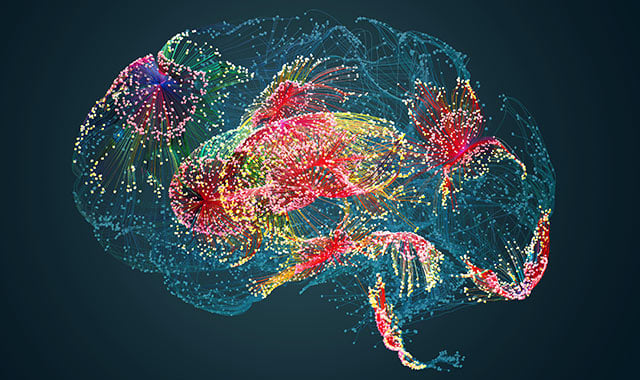
In a recent conversation with a group of operators, we had a real, unfiltered discussion about brain injury: what they’ve experienced and seen in their teammates, what they’ve pushed through, and what it has cost over time.
There was no dramatization and no hesitation. It was direct, gritty, and grounded in lived experience. What came through clearly was the uncertainty they face: risk of an injury they cannot see, track, or always fully understand. After that discussion, one of them said, “And I would do it all over again,” meaning every element of the mission, including the exposures known to contribute to brain injury. It wasn’t just his perspective. It was understood and affirmed by every operator in the room.
This is the population we are called to support: those who understand the risks, accept them, and continue forward. Their commitment demands an equal commitment from those of us whose work is to understand, reduce, and address the risks they face.
What We’re Talking About When We Talk About Brain Injury
Brain injury is one category of what the SOF community has come to call invisible wounds, alongside psychological trauma, moral injury, and the chronic stress of a career in special operations. These conditions interact in ways we are still working to fully understand. Brain injury, however, carries its own neurological signatures and trajectory.
Brain injury in Special Operations spans a spectrum, and where an operator falls on that spectrum shapes how the injury presents, progresses, and responds to care.
- Acute impact-related traumatic brain injury results from a single high-impact event such as an explosion, vehicle crash, or fall, and typically produce symptoms that are immediate and recognizable enough to prompt evaluation.
- Blast-related brain injury is a distinct category. Explosive blast generates a pressure wave that moves through the body differently than direct impact, and its effects on the brain are not always immediate or obvious. At the extreme end, a large blast event can cause acute injury. More commonly in SOF, the concern is cumulative. Repeated exposure to blast overpressure, through breaching, heavy weapons fire, and certain parachute operations, creates neurological load that builds silently across a career, often below the threshold that triggers formal medical response.
Protocols for acute brain trauma exist, even if imperfectly applied in operational settings. Cumulative neurological damage presents with subtler symptoms that may not be recognized in the moment. In an environment defined by high-stakes mission demands and team accountability, that damage can go unrecognized for years, especially as tools for self-surveillance lag behind the science.
SOF operators face brain injury at rates that set them apart from the broader military. High operational tempo, compressed recovery windows, and the physical demands of special operations create conditions for repeated neurological exposure that most service members never approach. Addressing this requires solutions built specifically for the realities of special operations.
The research base is growing rapidly across academic and military institutions, particularly in blast exposure. In one significant example, research by Dr. Daniel Perl and colleagues at the Uniformed Services University identified a distinct pattern of astroglial scarring at the junction of gray and white matter in blast-exposed veterans. This pathology is not observed in contact-sport athletes, is invisible on conventional imaging, and appears specific to blast exposure. More recent neuroimaging research from Harvard and Massachusetts General Hospital has detected measurable brain changes in personnel with repeated blast exposure that standard clinical MRI cannot identify.
Taken together, these findings point to a sobering reality: operators who screen as fine may be carrying real neurological burden that current tools are not designed to detect.
As Dr. James Kelly, the Chief Medical Scientist at the Invisible Wounds Foundation explains, “The biggest concern for our special operations community relative to their brain health is a combination of injuries that are inherent in the work that they do, often subtle but cumulative. There’s a wear and tear on the brain in a hidden fashion that influences brain function and makes brain health more of a concern.”
The Cost to Operators, Families and the Force
When brain injury goes unrecognized or unaddressed, the effects extend far beyond the individual operator.
At the individual level, symptoms accumulate across domains, including:
- Cognitive: slowed processing, memory problems, difficulty sustaining attention, and impaired decision-making under pressure
- Emotional and behavioral: irritability, mood shifts, aggression, and personality changes that feel foreign to the operator and confusing to those closest to them
- Physical: persistent headaches, disrupted sleep, and chronic fatigue that erode resilience over time
Operators often manage these symptoms privately. Self-management and coping strategies do not address the underlying injury and can increase isolation while delaying care.
Part of what makes this so difficult is that brain injury interferes with self-recognition. As Dr. Kelly notes, “The person with the brain problem is often the last one to actually know it.” In a culture built on self-sufficiency and resilience, this creates a real barrier to early intervention.
Research links a history of TBI, particularly repeated or untreated injury, to significantly elevated suicide risk. The cumulative burden of cognitive, emotional, and physical symptoms degrades quality of life across relationships, work, and identity, often for years before the root cause is identified.
When neurological strain intersects with psychological trauma or chronic operational stress, the impact is not a simple sum of those factors. These conditions interact in ways that amplify load, accelerate decline, and make the overall effect more difficult to recognize and address. Often, the person carrying that combined burden is navigating it without any of it being clearly named.
Families are an essential part of this equation. Brain injury does not occur in isolation. Its effects often show up first at home, as changes in behavior, communication, and connection. These shifts can be confusing and difficult to interpret, especially when there is no clear diagnosis or shared understanding of what is happening. Families are frequently the first to see it and may not have effective strategies to support their loved ones.
For the force, the impact is operational.
Cognition is the primary asset in the Human Weapon System. When it is degraded, decision speed, clarity, and reaction time all decline, often at the moments they matter most.
Confidence is affected as well. When an operator is not fully processing at their normal level, hesitation increases and decision advantage narrows. Teams feel that immediately. In small units, performance is interconnected. When one person is not fully there, others compensate, margins tighten, and risk increases.
This is not always visible and is often normalized, but it is cumulative. Over time, it contributes to operators leaving earlier than they otherwise would, taking with them experience, judgment, and instinct that cannot be quickly rebuilt.
Prevention, Intervention and the Work Still Ahead
Significant progress has been made in prevention and recovery through initiatives like the Department of War’s Warfighter Brain Health Initiative. Blast overpressure threshold guidance, required blast metrics from weapons manufacturers, and expanded exposure monitoring within SOCOM reflect a shift toward treating brain health as a measurable and reducible operational risk. DHA is currently finalizing the next iteration of Warfighter Brain Health, incorporating lessons learned since inception and addressing gaps in implementation, integration, and measurement.
Research reinforces the importance of this shift. For many operators, training environments account for a greater share of lifetime blast exposure than combat. Protection built into training has a long-term impact across a career.
On intervention, the evidence is strong. The National Intrepid Center of Excellence (NICoE) at Walter Reed, which Dr. Kelly helped establish, pioneered an interdisciplinary model of care that addresses physical symptoms, cognitive function, and psychological health together. This approach has achieved return-to-duty rates exceeding 90%.
This is not isolated success. Across the system, there are pockets of excellence delivering similar outcomes. The issue is not whether effective care exists. It is whether it is consistently accessible to the operators who need it, when they need it. Early identification and whole person care significantly improve outcomes. The challenge is ensuring these approaches reach operators wherever they serve.
The remaining frontier is detection, moving assessment closer to the point of exposure. As Dr. Kelly notes, field-deployable capability is essential. Tools that can identify injury in real time and in austere environments are in development and carry significant implications for early intervention.
Amplifying What Works
The SOF community has built real capability in brain health through prevention policy, integrated care models, and advancing clinical understanding. What is needed now is connection. Systems that extend effective approaches across commands, integrate data across an operator’s career, and accelerate translation of science into operational tools.
Battelle operates at this intersection, bringing together neuroscience, engineering, data analytics, and military health expertise. The role is integration and scale. Ensuring that what works in one place reaches the broader force. Connecting systems that were not designed to work together. Translating advancing science into tools that clinicians and commanders can act on.
This work carries responsibility beyond technical execution. It carries human consequences. Exposure histories, risk data, and performance metrics represent people who volunteered to carry extraordinary burden. How that information is collected, interpreted, and communicated matters.
Trust is not secondary. It is foundational.
Warfighters put their lives, and their long-term brain health, on the line every day.
Science is advancing, and there is more to learn. The force is adapting, and more is required to fully address what operators are carrying. The programs exist, but they are not yet at scale and not always accessible where they are needed most.
What remains is the work of aligning systems, integrating what is known with what is still emerging, and delivering it consistently across the force.
That work is complex and ongoing. It must be disciplined, integrated, and worthy of those who serve.
It can be done.
Ready to learn more? Explore Battelle’s human health and performance capabilities.
Related Blogs


BATTELLE UPDATES
Receive updates from Battelle for an all-access pass to the incredible work of Battelle researchers.