Prevail and Preserve: Winning the Fight, Protecting the Force
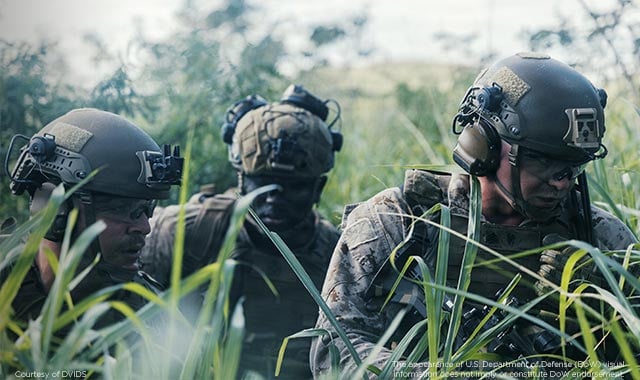
There's a moment when preparation meets reality. Training is over. The environment is live. And operators must perform. What happens then—and what happens after—determines whether readiness translates into results, and whether the force can sustain that performance over time.
Prevail and Preserve complete the U.S. Special Operations Command’s (SOCOM) Preservation of the Force and Family (POTFF) framework: the pillars focused on outcomes. Prevail is about succeeding in the fight. Preserve is about protecting the investment, both in individuals across their careers and in the long-term performance of the force as a whole.
These pillars build on the proactive foundations of Prevent and Prepare. While those pillars build capacity, Prevail and Preserve determine whether that capacity translates into mission success and whether it can be sustained over time. It's about protecting the biggest advantage Special Operations Forces (SOF) has: the human advantage.
Prevail: What It Takes to Win
In Special Operations, winning is not defined by a single engagement or moment of contact. It is defined by the ability to achieve mission objectives under uncertainty—repeatedly, across changing conditions, and without catastrophic degradation of the force. SOF operates in contested and denied spaces, austere environments and conditions of heightened ambiguity where plans rarely survive first contact. In these environments, success depends not only on preparation but on the ability to sustain human performance throughout the duration of operations.
What operators need to prevail reflects all five domains of readiness. Psychological resilience to manage cumulative stress during extended operations. Medical support and injury management, even in remote or harsh conditions. Cognitive tools that aid decision-making and help maintain clarity under pressure. Moral grounding to navigate loss, ambiguity and ethical complexity. And connection to home, with confidence that families are supported emotionally, logistically and financially while operators are away.
For commanders, prevailing often hinges on visibility into the human system. Understanding not just where teams are positioned but how they are holding up physically, cognitively and psychologically enables leaders to sequence missions, manage risk and allocate personnel more effectively. When leaders can anticipate degradation before it becomes failure, they can adapt plans in ways that protect both mission success and the force itself.
Delivering this support requires more than good intentions. It requires systems and infrastructure that can operate at the speed and complexity of modern Special Operations. That means:
- Agile logistics and program management capable of delivering medical care, behavioral health support and performance optimization resources wherever the mission goes, not only at garrison but forward and in challenging environments.
- Risk assessment capabilities tailored to specific environments, populations and mission profiles. Different operating conditions such as extreme cold, high altitude, sustained isolation and blast exposure pose different risks to human performance. Identifying these risks proactively enables targeted preparation and faster intervention.
- Decision support that provides commanders with timely insight into force readiness across physical, cognitive and psychological domains. Visibility at both individual and force levels enables informed decisions about mission planning, personnel utilization and support requirements as conditions evolve.
- Integrated coordination across domains connecting medical, psychological, cognitive and family support functions. Operators do not experience stress in silos; for example, worries about family can translate into sleep issues, which in turn impact emotional regulation, decision-making and physical performance. Effective support during operations must reinforce resilience across the entire human system.
When this infrastructure is in place, operators can focus on the mission knowing the systems behind them are working, and commanders can make better tactical decisions. That is what it means to prevail: not just entering the fight prepared but sustaining effectiveness until the mission is complete.
Preserve: Strong for the Long Haul
If prevail is about winning in the moment, preserve is about ensuring the force can keep winning over time. Within the POTFF framework, preservation focuses on sustaining long-term operational capability while protecting the people who generate that advantage across and beyond their careers. These goals are inseparable. The force cannot be preserved if its people are not.
For operators, the demands of Special Operations are cumulative. Physical wear, cognitive fatigue, psychological strain and moral burden build over years of training, deployment and recovery cycles. When these effects are not addressed deliberately, they erode performance, shorten careers and diminish quality of life after service. Preserving the operator means sustaining health, function and identity across an entire career and beyond it. It also means providing effective, ongoing family support that evolves with the career of the operator and the needs of the family.
At the force level, preservation is about sustaining capability over time. Years of investment in training, experience and judgment are at risk when cumulative human strain leads to attrition or degraded performance. Retaining experienced operators, enabling knowledge transfer and maintaining continuity through inevitable turnover protects operational effectiveness as threats evolve, technologies change and missions grow more complex.
Delivering preservation at this scale requires deliberate, long-term infrastructure focused on outcomes rather than programs. It depends on the ability to see cumulative strain across the force over time, coordinate recovery and support across domains, and adapt resources as needs evolve. This approach ensures preservation efforts remain responsive across careers, families and changing operational demands.
Preserve is about honoring the investment made in people and the trust they place in the institution. It ensures that experience is not discarded, families are not sidelined, and service does not come at the expense of long-term health or purpose. This is how the force maintains continuity, credibility and strength across generations.
Sustaining the Human Advantage
Prevail and Preserve complete the POTFF framework by focusing on outcomes. Together, they ensure that investment in people translates into mission success today and enduring capability over time. Winning the fight matters. So does protecting the force that must continue to fight tomorrow, next year and across generations.
But sustaining that enduring advantage requires more than well-intentioned programming. It requires visibility into individual and force capacity across domains, coordination across support systems, and the ability to respond to emerging needs in real time. You cannot protect what you cannot see, and you cannot improve what you do not assess.
That’s why it’s critical to have systems in place to measure outcomes and effectiveness and apply that data to strategic planning and day-to-day operational decision-making. It is not just about having resources in place. It is about knowing when and how to apply them, adapting as conditions change, and sustaining readiness across the full lifecycle of service.
The First SOF Truth endures: humans are more important than hardware. Supporting this mission requires partners who understand the complexity of human performance in Special Operations and who bring the experience and systems required for successful program management. Battelle’s approach to military health optimization reflects this integrated vision, from training and mission execution through recovery, transition and long-term resilience.
Ready to learn more? Explore Battelle’s military health optimization capabilities.
Featured Expert

Alison Messick
DIRECTOR OF WARFIGHTER READINESS AND RESILIENCE
Alison Messick serves as the Director of Warfighter Readiness and Resilience, leading enterprise-wide initiatives that strengthen the readiness and resilience of U.S. Special Operations Forces and other military teams. A former U.S. Marine and nationally recognized leader in military health and family systems, Alison brings more than 25 years of experience in advancing human performance, behavioral health, and family engagement. Her work drives innovation and integration across large-scale programs to ensure service members and their families remain mission-ready, resilient, and supported.
Related Blogs




BATTELLE UPDATES
Receive updates from Battelle for an all-access pass to the incredible work of Battelle researchers.