Critical Conversations in SOF: The Family, Seen and Understood
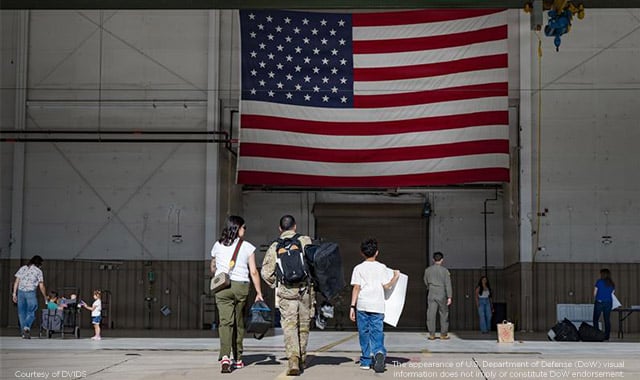
For years, when we talked about military families within the Special Operations community, the narrative centered on grit. Resilience. Quiet sacrifice. And if this were simply about any one of those, or even all of them together, we would be fine. But it is not.
I have spent more than three decades in multiple military communities: as a Marine, as a federal employee in SOF, as part of a national nonprofit supporting the SOF community and as a military spouse of 23 years. At Battelle, I am now leading large-scale human performance efforts aligned with POTFF modernization. I have seen what works. And I have seen what quietly degrades performance.
I am deeply grateful to the SOF families who have trusted me along the way—who have allowed me into their experiences, shared their perspectives and helped me better understand how to support this community. I have also learned from the providers, clinicians, and benevolent organizations that support them every day. There is nothing assumed in that access. Their willingness to engage, and to believe in the effort, is what makes this work possible.
What I have learned from them—families and those who support them—is this: family stability is not adjacent support. It is operational infrastructure. When it degrades, readiness degrades. When it is reinforced, performance stabilizes.
What is needed now is not more grit; our families have more than enough. We also have plenty of research to show what works and many excellent programs providing essential service and support to military families. What is needed now is a focus on access, utilization and integration: making sure the right support reaches the right family at the right time, consistently, across the force, without friction, stigma or delay.
The Other Side of the Mission
There are aspects of Special Operations life that are difficult to explain outside the community, not because they are classified, but because they are lived. Military spouses and partners—with or without children—carry the weight of sustaining careers, relationships and daily life through repeated long absences and frequent relocations. This unfolds alongside a profession defined by high operational tempo, demanding training and deployments to austere and often unpredictable environments.
For 18 years and six deployments, Sarah* has managed the home front alone for up to 200 days a year. When her husband is away, she is the plumber, the handyman, the chauffeur, the tutor—all while holding down a demanding full-time job of her own. It is exhausting and relentless, and it is ordinary. When she delivered her second child, her husband was home for just 24 hours before shipping out again. At the same time, there is always a quiet awareness in the back of her mind that shapes her days. She avoids watching too much news. When her husband deploys, she keeps the house immaculate—so if she ever gets that dreaded knock on the door, as some of her friends have, her house is in order.
Steve “Tank” Tankersley, who served as a Navy SEAL for 27 years before joining Battelle as a Senior Program Manager describes the cost that accumulates quietly on the other side of those deployments: “My oldest daughter said to me recently, ‘I don’t think we saw you for five years.’ And that’s rough. That’s what we signed up for, and we need people to do it…but there is a cost.”
These are not exceptional stories. They are ordinary features of SOF life, repeated across the force in countless variations. And they carry direct operational consequences. The impact of SOF life on families, and the impact of family wellbeing on operators, runs in both directions.
Dr. Anna Crane, a clinical psychologist who has worked with the SOF community and their families for more than 15 years, frames the connection plainly: “If your family is healthy and happy, and the operator feels like they’re being taken care of…then they’re more likely to be focused on the mission, and the family is more likely to be supportive of the operator. That ties directly to operational readiness and force longevity.”
The inverse is just as true, but it is rarely driven by a single factor. Strain can build over time through repeated time apart, shifting responsibilities, fatigue, loss, injury or experiences that are difficult to fully process or explain. Sometimes it is cumulative. Sometimes it is situational. Sometimes it is simply that something feels different and no one can clearly point to why. What matters is that when strain enters the system, it affects everyone within it.
Frequent deployments and limited dwell time at home compress the space families have to establish and maintain routines. What follows is not a failure to prioritize what matters, but a constant process of adjustment, making the most of the time available. For Sarah*, reintegration was one of the hardest aspects of SOF life to navigate. “It took me 15 years to figure out how to do it,” she says. “You have such a short time with them sometimes, so when they’re home, you say, ‘I’m not going to go to the gym. I’m not going out with friends. The kids can stay up late.’” Over time, these adjustments, made for the right reasons, can quietly disrupt the very rhythms that sustain stability.
*Name changed.
Adaptation is Not Sustainment
Twenty years of sustained conflict and high operational tempo placed cumulative demands on family systems that were already absorbing significant strain: multiple deployments, compressed dwell time, repeated reintegration cycles, the weight of operational secrecy. The force adapted. Families adapted. But adaptation is not sustainment, and the transformation phase now underway demands more than endurance. It demands integrated, evidence-based programs that support both operators and families.
That work is already underway under the Preservation of the Force and Family (POTFF) initiative. The social and family pillar of POTFF represents some of the most committed, hardest-working practitioners in the human performance space. Over the past two decades, leaders, clinicians, coordinators and community volunteers have built real programs, developed genuine expertise and shown up consistently for families under extraordinary pressure. That work matters, and it has produced results that the broader force can learn from.
We know what moves the needle:
- Healthy community. Social support matters; military families thrive when they have close, non-judgmental support from others who understand their realities. Strong, intentional communities buffer stress in ways that formal programs alone cannot replicate.
- Cultural competence in care. Only about 13% of civilian clinicians are equipped to deliver culturally competent care to military families. Providers who don't understand the culture, the language or the unique stressors can't close the gap.
- Structured reintegration support. Reintegration is one of the most consistently underestimated stress points in the SOF lifecycle. When transition support is structured and accessible, outcomes improve measurably.
- Practical, skills-based intervention. “If we can have something that's more targeted, short-term — here's the skills, you got this, take it and go — that is more effective for the majority of people,” Dr. Crane observes.
Generational expectations are also shifting. Families today are often more willing to seek support than previous generations, but less willing to navigate friction to find it. They expect accessibility, responsiveness and consistency.
In the best commands and communities, this is already happening. The challenge now is consistency and scale.
The Path Forward: Integration, Utilization and Evidence-Based Support
If the last two decades were about endurance, this era is about integration—across battlefield and home front, across domains, across policy and execution. Programs that are integrated, evaluated and continuously improved do more than offer support. They create sustained relational durability across the force.
Utilization is the measure that matters. Support that exists but goes unused (because it is hard to find, culturally misaligned or poorly timed) does not stabilize readiness. The goal is not more programs. It is better integration of what already works: connecting effective interventions to the families who need them, reducing friction in access, and building the data infrastructure to understand what is actually moving the needle across the force.
At Battelle, our approach to human health and performance reflects this integrated reality. Real-world readiness challenges don’t respect disciplinary boundaries—and neither do we. Our teams bring together expertise across behavioral health, data analytics and program management to connect what works, surface patterns at scale and strengthen the systems already running across the force. We work alongside the programs and professionals already invested in this community, using data and science to amplify what’s working.
The family system is not a support function at the edge of the mission. It is the operational infrastructure at the center of it. In this environment, it must be treated that way.
Ready to learn more? Explore Battelle’s human health and performance capabilities.
Related Blogs



BATTELLE UPDATES
Receive updates from Battelle for an all-access pass to the incredible work of Battelle researchers.